 It’s nearly impossible to resist junk food. For decades, food scientists have been engineering delicious snacks that are as addictive as any drug. Barbecue potato chips, cheese puffs, sugary cereal, and pretzels dusted with heavenly honey-mustard powder are the product of an intense scientific effort that has only been rivaled by the Manhattan Project. When facing such insurmountable odds, it’s easy to give up and gorge on the tasty morsels. Thankfully, the same food-science masterminds that have been working against you all these years have had a change of heart. They’re actually using their genius to create tasty low-fat, low-calorie snacks that won’t stick to your waistline like congealed tallow. These snacks can be eaten—in moderate quantities—without turning you into Paul Prudhomme. But you’ll still need to exercise some restraint, because no matter how low-fat junk food is, it’s still junk food. Whatever you do, don't overindulge. Read more:
Showing posts with label health care. Show all posts
Showing posts with label health care. Show all posts
Monday, April 18, 2011
Healthy Junk Food Choices
It’s nearly impossible to resist junk food. For decades, food scientists have been engineering delicious snacks that are as addictive as any drug. Barbecue potato chips, cheese puffs, sugary cereal, and pretzels dusted with heavenly honey-mustard powder are the product of an intense scientific effort that has only been rivaled by the Manhattan Project. When facing such insurmountable odds, it’s easy to give up and gorge on the tasty morsels. Thankfully, the same food-science masterminds that have been working against you all these years have had a change of heart. They’re actually using their genius to create tasty low-fat, low-calorie snacks that won’t stick to your waistline like congealed tallow. These snacks can be eaten—in moderate quantities—without turning you into Paul Prudhomme. But you’ll still need to exercise some restraint, because no matter how low-fat junk food is, it’s still junk food. Whatever you do, don't overindulge. Read more:

Saturday, April 16, 2011
How Little Sleep Can You Get Away With?

We all know that we don’t get enough sleep. But how much sleep do we really need? Until about 15 years ago, one common theory was that if you slept at least four or five hours a night, your cognitive performance remained intact; your body simply adapted to less sleep. But that idea was based on studies in which researchers sent sleepy subjects home during the day — where they may have sneaked in naps and downed coffee.
Enter David Dinges, the head of the Sleep and Chronobiology Laboratory at the Hospital at University of Pennsylvania, who has the distinction of depriving more people of sleep than perhaps anyone in the world.
In what was the longest sleep-restriction study of its kind, Dinges and his lead author, Hans Van Dongen, assigned dozens of subjects to three different groups for their 2003 study: some slept four hours, others six hours and others, for the lucky control group, eight hours — for two weeks in the lab.

Every two hours during the day, the researchers tested the subjects’ ability to sustain attention with what’s known as the psychomotor vigilance task, or P.V.T., considered a gold standard of sleepiness measures. During the P.V.T., the men and women sat in front of computer screens for 10-minute periods, pressing the space bar as soon as they saw a flash of numbers at random intervals. Even a half-second response delay suggests a lapse into sleepiness, known as a microsleep.
Read More

Enter David Dinges, the head of the Sleep and Chronobiology Laboratory at the Hospital at University of Pennsylvania, who has the distinction of depriving more people of sleep than perhaps anyone in the world.
In what was the longest sleep-restriction study of its kind, Dinges and his lead author, Hans Van Dongen, assigned dozens of subjects to three different groups for their 2003 study: some slept four hours, others six hours and others, for the lucky control group, eight hours — for two weeks in the lab.

Every two hours during the day, the researchers tested the subjects’ ability to sustain attention with what’s known as the psychomotor vigilance task, or P.V.T., considered a gold standard of sleepiness measures. During the P.V.T., the men and women sat in front of computer screens for 10-minute periods, pressing the space bar as soon as they saw a flash of numbers at random intervals. Even a half-second response delay suggests a lapse into sleepiness, known as a microsleep.
Read More

Friday, April 15, 2011
Nervous System Imbalance May Cause Fatigue in Breast Cancer Survivors
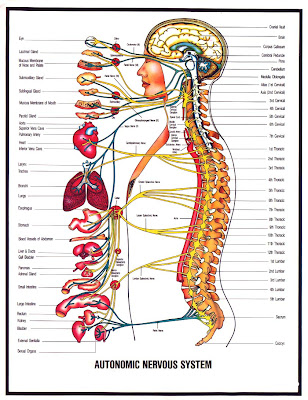
The persistent fatigue and exhaustion plaguing some breast cancer survivors after successful treatment stems from a tug of war between the "fight-or-flight" and "resting" parts of the autonomic nervous system, with the former working overtime and the other unable to rein it in, a new study suggests.
Researchers from Ohio State University split 109 women who had completed breast cancer treatment up to two years earlier into two groups -- those who did and didn't report long-term fatigue -- and tested their blood for a baseline level of norepinephrine, a stress hormone. Participants were then asked to give a five-minute speech and do a series of verbal math problems, both tasks aimed at increasing their stress levels.
As expected, further blood tests showed that levels of norepinephrine -- associated with the "fight-or-flight" sympathetic nervous system -- rose in both groups after the stressful experience, researchers said. However, breast cancer survivors who experienced persistent fatigue had higher levels than those who weren't chronically tired.
The study, released online in advance of publication in an upcoming print issue of the journal Psychoneuroendocrinology, was partially funded by the U.S. National Institutes of Health and the American Cancer Society.
The findings are the most recent from a 30-year-long study about the effects of stress on the human body. The researchers used earlier data from a larger ongoing study looking at whether yoga can ward off continuing fatigue in breast cancer patients.
Read More
Friday, March 18, 2011
State Wrestles With Health Coverage
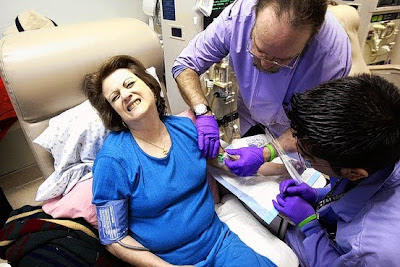
Washington is one of few states that factors cost into its health-coverage decisions, in addition to effectiveness and safety. Critics say that amounts to rationing because it can limit access for patients who need services but can't afford them.
"We agree there need to be restrictions," said David Kloth, a board member of the American Society of Interventional Pain Physicians. "We just think they need to be the appropriate restrictions."
The committee was being closely watched by health-care industry stakeholders amid fears other states might adopt decisions made in Washington.
"The precedent-setting factor that Washington state could potentially be setting is disconcerting," said Carrie Hartgen, vice president of state government relations and regional affairs at AdvaMed, the medical-device trade group. "In this current budget climate, states are looking for any way to save money and balance their budget."
But some observers say states have little choice but to find ways to curb health costs.
Read More
"We agree there need to be restrictions," said David Kloth, a board member of the American Society of Interventional Pain Physicians. "We just think they need to be the appropriate restrictions."
The committee was being closely watched by health-care industry stakeholders amid fears other states might adopt decisions made in Washington.
"The precedent-setting factor that Washington state could potentially be setting is disconcerting," said Carrie Hartgen, vice president of state government relations and regional affairs at AdvaMed, the medical-device trade group. "In this current budget climate, states are looking for any way to save money and balance their budget."
But some observers say states have little choice but to find ways to curb health costs.
Read More
Thursday, March 17, 2011
Health food stores, pharmacies field demand for iodide tablets

Area pharmacies and health food stores are being flooded with customers wanting to buy potassium iodide tablets to mitigate potential negative effects if radiation from nuclear explosions in Japan were to travel to the West Coast, staff members say.
"We've had phone calls and questions all day long since Monday," said Arte Whyte, supplements specialist at Shelton's Natural Foods Market in Healdsburg, on Wednesday. "We're out of stock right now, and I have a waiting list for my next shipment."
At the Healdsburg Rite Aid pharmacy, staff said customers have been asking about the tablets for the last two days, but the pharmacy does not stock them.
"I'm not worried," said Pharmacy Technician Patricia Schaffer-Adams of the Larkfield-Windsor area. "If it was something a little closer, I would be."
Some Bay Area health officials are advising people that the threat of radiation exposure is not there, and that people should avoid taking the potassium iodide tablets.
Potassium iodide tablets are given to people exposed to excessive radiation to block absorption of radioactive iodide.
"Using potassium iodide when inappropriate could have potential serious side effects such as abnormal heart rhythms, nausea, vomiting, electrolyte abnormalities and bleeding," according to the California Department of Public Health.
On Tuesday, Bay Area health leaders in Contra Costa County issued a notice saying there appears to be no risk at present to area residents from radioactivity leaking from damaged reactors in Japan.
Read More
"We've had phone calls and questions all day long since Monday," said Arte Whyte, supplements specialist at Shelton's Natural Foods Market in Healdsburg, on Wednesday. "We're out of stock right now, and I have a waiting list for my next shipment."
At the Healdsburg Rite Aid pharmacy, staff said customers have been asking about the tablets for the last two days, but the pharmacy does not stock them.
"I'm not worried," said Pharmacy Technician Patricia Schaffer-Adams of the Larkfield-Windsor area. "If it was something a little closer, I would be."
Some Bay Area health officials are advising people that the threat of radiation exposure is not there, and that people should avoid taking the potassium iodide tablets.
Potassium iodide tablets are given to people exposed to excessive radiation to block absorption of radioactive iodide.
"Using potassium iodide when inappropriate could have potential serious side effects such as abnormal heart rhythms, nausea, vomiting, electrolyte abnormalities and bleeding," according to the California Department of Public Health.
On Tuesday, Bay Area health leaders in Contra Costa County issued a notice saying there appears to be no risk at present to area residents from radioactivity leaking from damaged reactors in Japan.
Read More
Monday, March 14, 2011
Health care rules released

State and federal officials say new rules released by the Departments of Health and Human Services and Treasury Thursday offer states like Vermont more guidance in applying for waivers that advance health care reform.
The two federal departments this week released the applications that states will need to turn in asking for the waivers that will allow them to experiment with new health care programs.
The proposed regulation also describes how those proposals should be monitored and evaluated, and what states need to do to ensure that the public receives information on the waiver requests.
"This is very good for us because it spells out what we have to do to apply for the waivers," said Anya Rader Wallack, special assistant to Gov. Peter Shumlin for health care reform. "This is important because it lets us know what we have to do to apply for the waivers."
The proposed rules released Thursday are for states that want to apply for the 2017 waivers, though states like Vermont want to get a jump and apply for the waivers in 2014.
Last month, Shumlin was in Washington, D.C., at a meeting of the National Governors Association, and President Barack Obama said he supported legislation that would allow states to apply early for the waivers.
Read More
The two federal departments this week released the applications that states will need to turn in asking for the waivers that will allow them to experiment with new health care programs.
The proposed regulation also describes how those proposals should be monitored and evaluated, and what states need to do to ensure that the public receives information on the waiver requests.
"This is very good for us because it spells out what we have to do to apply for the waivers," said Anya Rader Wallack, special assistant to Gov. Peter Shumlin for health care reform. "This is important because it lets us know what we have to do to apply for the waivers."
The proposed rules released Thursday are for states that want to apply for the 2017 waivers, though states like Vermont want to get a jump and apply for the waivers in 2014.
Last month, Shumlin was in Washington, D.C., at a meeting of the National Governors Association, and President Barack Obama said he supported legislation that would allow states to apply early for the waivers.
Read More
Tuesday, March 8, 2011
Health and fitness briefs: Healthful recipes for Lent

To help make the notion of giving up favorite foods during Lent easier, the Church Health Center in Memphis has created a daily devotion called Seasoning Lent, which will offer a healthful recipe for each day of the 40-day season.
"Traditionally, Lent is a time of spiritual discipline, when people give up various foods as a time of sacrifice," said Rachel Thompson, editor of the Church Health Reader (chreader.org), where Seasoning Lent recipes will be found throughout Lent.
"Some traditions instead choose to take up a virtue or a practice, like a community service. We thought this would be a great way to incorporate both traditions. Through Seasoning Lent, we are inviting people to give up unhealthy foods and take up the practice of cooking."
Each day, Seasoning Lent will provide a different recipe from the CHC Nutrition Kitchen created by the on-staff nutritionists. "These recipes are taken straight from the kitchen at CHC Wellness, which offers daily classes on food preparation and cooking for the thousands of patients and clients we serve," Thompson said. "They are healthy yet economical and easy to prepare, and they will all fit a weekly theme inspired by the season of Lent.
"Each Friday's recipe will be vegetarian. As a way of preparing for the week, each Sunday will feature a devotional on a Lenten scripture text, as well as a weekly shopping list."
Read More
"Traditionally, Lent is a time of spiritual discipline, when people give up various foods as a time of sacrifice," said Rachel Thompson, editor of the Church Health Reader (chreader.org), where Seasoning Lent recipes will be found throughout Lent.
"Some traditions instead choose to take up a virtue or a practice, like a community service. We thought this would be a great way to incorporate both traditions. Through Seasoning Lent, we are inviting people to give up unhealthy foods and take up the practice of cooking."
Each day, Seasoning Lent will provide a different recipe from the CHC Nutrition Kitchen created by the on-staff nutritionists. "These recipes are taken straight from the kitchen at CHC Wellness, which offers daily classes on food preparation and cooking for the thousands of patients and clients we serve," Thompson said. "They are healthy yet economical and easy to prepare, and they will all fit a weekly theme inspired by the season of Lent.
"Each Friday's recipe will be vegetarian. As a way of preparing for the week, each Sunday will feature a devotional on a Lenten scripture text, as well as a weekly shopping list."
Read More
Friday, February 25, 2011
Fitness expert explains ways to manage stress

With Spring Break just a few weeks away, Fake Patty's Day looming over the horizon, midterms coming up and Kansas weather teasing us with no end in sight, it's safe to say this time of year is particularly stressful for college students.
While the stress might seem difficult to handle at times, there are many ways to de-stress and also improve your health in the process.
There's a new fitness website, DailyBurn.com, that is rapidly gaining popularity with over a million users already. With iPhone apps, workout plans, meeting motivators and groups, the website provides a variety of ways to accommodate the need of any person looking to stay healthy and get in shape.
Kate Brown, community manager of DailyBurn and certified fitness trainer, was able to offer specific tips for college students to help keep fit and manage stress.
Given that the typical college student is incredibly busy, many people might say they just don't have the time to exercise. Taking into account the life of a college student, Brown said high-intensity workouts are great to do in the middle of a study break. She said they require only the use of your own body weight and help reduce stress and refocus if you're knee-deep in an intense study session.
"What you're going for is speed and to get the most bang for you buck," Brown said.
There are three particular exercises she recommended. Body squats (as many as you can do in one minute), plank pushups and the cross body chop. Brown also said taking 30 minutes out of your day to go for a jog with a workout buddy is more beneficial than you might think.
Read More
While the stress might seem difficult to handle at times, there are many ways to de-stress and also improve your health in the process.
There's a new fitness website, DailyBurn.com, that is rapidly gaining popularity with over a million users already. With iPhone apps, workout plans, meeting motivators and groups, the website provides a variety of ways to accommodate the need of any person looking to stay healthy and get in shape.
Kate Brown, community manager of DailyBurn and certified fitness trainer, was able to offer specific tips for college students to help keep fit and manage stress.
Given that the typical college student is incredibly busy, many people might say they just don't have the time to exercise. Taking into account the life of a college student, Brown said high-intensity workouts are great to do in the middle of a study break. She said they require only the use of your own body weight and help reduce stress and refocus if you're knee-deep in an intense study session.
"What you're going for is speed and to get the most bang for you buck," Brown said.
There are three particular exercises she recommended. Body squats (as many as you can do in one minute), plank pushups and the cross body chop. Brown also said taking 30 minutes out of your day to go for a jog with a workout buddy is more beneficial than you might think.
Read More
Thursday, February 24, 2011
Seniors face unique oral health challenges

The fact we're living longer and keeping our natural teeth longer is making seniors' oral health increasingly complex, says Dr. Mary McNally, an associate professor of dentistry at Dalhousie University.
"The situation has changed from even a generation ago," she says.
"Then, the profile would be quite different in longterm care. Now, many of the people have much higher needs. As well as living longer, the data show that they are frailer and more of them have dementia."
Canadians' life expectancy is now an average of 80.7 years, compared to 78.4 a decade earlier, and the population balance is changing, according to Statistics Canada. In 1996, there were 3.5 million seniors in Canada. By 2021, the number is expected to almost double to 6.9 million.
Many members of this older generation are likely to have more or all of their natural teeth.
"We really have improved our oral health in the last 40 years," says Dr. Peter Cooney, the chief dental officer for Canada, citing the most recent Canadian Health Measures Survey.
"People are keeping their teeth much more. Only about six per cent of the Canadian population has full dentures."
The increase in the number retaining their teeth complicates the work of care providers, adds McNally.
"All of a sudden, the care sector has inherited people with lots of teeth, when, a generation ago, they would have had their teeth in a glass by the bed. Trying to brush someone else's teeth is not easy, especially people with dementia."
Phil Hughes, former president of the retired teachers organization of Nova Scotia and former chair of the Group of IX Nova Scotia Seniors' Organizations, says he is "very concerned with all aspects of senior oral health, in particular, the barriers faced by seniors."
He cites a long list of issues ranging from the cost of care, the lack of dental insurance or public dental programs to living in rural areas without easy access to a dental office, fear of dental visits and disease and disability "that makes brushing or flossing extremely challenging."
Read More
"The situation has changed from even a generation ago," she says.
"Then, the profile would be quite different in longterm care. Now, many of the people have much higher needs. As well as living longer, the data show that they are frailer and more of them have dementia."
Canadians' life expectancy is now an average of 80.7 years, compared to 78.4 a decade earlier, and the population balance is changing, according to Statistics Canada. In 1996, there were 3.5 million seniors in Canada. By 2021, the number is expected to almost double to 6.9 million.
Many members of this older generation are likely to have more or all of their natural teeth.
"We really have improved our oral health in the last 40 years," says Dr. Peter Cooney, the chief dental officer for Canada, citing the most recent Canadian Health Measures Survey.
"People are keeping their teeth much more. Only about six per cent of the Canadian population has full dentures."
The increase in the number retaining their teeth complicates the work of care providers, adds McNally.
"All of a sudden, the care sector has inherited people with lots of teeth, when, a generation ago, they would have had their teeth in a glass by the bed. Trying to brush someone else's teeth is not easy, especially people with dementia."
Phil Hughes, former president of the retired teachers organization of Nova Scotia and former chair of the Group of IX Nova Scotia Seniors' Organizations, says he is "very concerned with all aspects of senior oral health, in particular, the barriers faced by seniors."
He cites a long list of issues ranging from the cost of care, the lack of dental insurance or public dental programs to living in rural areas without easy access to a dental office, fear of dental visits and disease and disability "that makes brushing or flossing extremely challenging."
Read More
Tuesday, February 22, 2011
senior fitness – for body and mind

There are some things you are never too old to do. Learning new tricks, falling in love, and keeping in shape.
According to research, the most important thing on that list for seniors is staying in shape.
"There is new evidence that senior citizens can preserve the size of their brain and memory into old age by walking regularly at least 6 miles per week," a recent study supported by the National Institute on Aging states.
So it appears, staying in shape for seniors can make learning new tricks easier and make falling in love something they can remember.
"Brain size shrinks in late adulthood, which can cause memory problems," said study author Kirk I. Erickson in "Senior Journal."
In his study, Erickson recorded the number of blocks walked per week in 299 dementia-free people with an average age of 78. The study found that people who walked at least 6 to 9 miles per week, had greater gray matter volume than people who don't walk as much and less problems with memory loss and dementia.
As often as weather permits, Bud Gott, 86, of Corning, walks the length of the town, from his home to the post office and back everyday.
A veteran of Iwo Jima, Gott said the activity has kept him in shape and has become a welcome habit.
Got also continues to do his own yard work which includes mowing his large lawn with a push mower.
Meredith Allen, athletic trainer and physical therapy assistant at Physical Therapy and Wellness Center in Corning, says staying fit is important for seniors.
"Physical fitness is important for the aging adult in helping prevent injuries," said Allen. "Walking and light resistive weight training can also help with joint discomfort and muscle fatigue."
A study published in the "Journal of the American Medical Associations" found physical activity of at least 150 minutes per week can lower the risks of chronic diseases and help ward off obesity. That is 30 minutes a day, five days a week, or 50 minutes three times a week.
According to research, the most important thing on that list for seniors is staying in shape.
"There is new evidence that senior citizens can preserve the size of their brain and memory into old age by walking regularly at least 6 miles per week," a recent study supported by the National Institute on Aging states.
So it appears, staying in shape for seniors can make learning new tricks easier and make falling in love something they can remember.
"Brain size shrinks in late adulthood, which can cause memory problems," said study author Kirk I. Erickson in "Senior Journal."
In his study, Erickson recorded the number of blocks walked per week in 299 dementia-free people with an average age of 78. The study found that people who walked at least 6 to 9 miles per week, had greater gray matter volume than people who don't walk as much and less problems with memory loss and dementia.
As often as weather permits, Bud Gott, 86, of Corning, walks the length of the town, from his home to the post office and back everyday.
A veteran of Iwo Jima, Gott said the activity has kept him in shape and has become a welcome habit.
Got also continues to do his own yard work which includes mowing his large lawn with a push mower.
Meredith Allen, athletic trainer and physical therapy assistant at Physical Therapy and Wellness Center in Corning, says staying fit is important for seniors.
"Physical fitness is important for the aging adult in helping prevent injuries," said Allen. "Walking and light resistive weight training can also help with joint discomfort and muscle fatigue."
A study published in the "Journal of the American Medical Associations" found physical activity of at least 150 minutes per week can lower the risks of chronic diseases and help ward off obesity. That is 30 minutes a day, five days a week, or 50 minutes three times a week.
Monday, February 21, 2011
Local health clinics desperate for financial savior

Palm Beach County health leaders are searching for a white knight after Gov. Rick Scott zeroed out clinic care from his proposed budget for the Florida Department of Health.
So far, no rescuers are stepping forward.
The state manages seven clinics that serve vulnerable people in Palm Beach County: the uninsured, the homeless, migrant workers, those on Medicaid, those lacking a doctor.
The clinics care for pregnant women, people with HIV/AIDS, patients with chronic diseases such as diabetes, people with infectious diseases - anyone with nonemergency medical needs.
The health department saw about 67,000 clients last year from Pahokee to Delray Beach, and if the state agency pulls its $5 million contribution, the entire $30 million program risks closure or dramatic shrinkage, warned Dr. Claude Earl Fox, who heads the Florida Public Health Institute in Lake Worth.
"If the health department gets out of primary care, which it looks like it may, you are talking about 40,000 to 60,000 patients who are going to have nowhere to go," Fox said. "I am not sure the capacity exists elsewhere to handle those patients."
Fox raised the specter of hospitals routinely seeing women showing up in the ER to give birth who have never visited a doctor, kids with ruptured eardrums from untreated infections and diabetics in comas from lack of insulin.
"This is something that could affect a lot of people in a very adverse fashion," Fox said.
So far, no rescuers are stepping forward.
The state manages seven clinics that serve vulnerable people in Palm Beach County: the uninsured, the homeless, migrant workers, those on Medicaid, those lacking a doctor.
The clinics care for pregnant women, people with HIV/AIDS, patients with chronic diseases such as diabetes, people with infectious diseases - anyone with nonemergency medical needs.
The health department saw about 67,000 clients last year from Pahokee to Delray Beach, and if the state agency pulls its $5 million contribution, the entire $30 million program risks closure or dramatic shrinkage, warned Dr. Claude Earl Fox, who heads the Florida Public Health Institute in Lake Worth.
"If the health department gets out of primary care, which it looks like it may, you are talking about 40,000 to 60,000 patients who are going to have nowhere to go," Fox said. "I am not sure the capacity exists elsewhere to handle those patients."
Fox raised the specter of hospitals routinely seeing women showing up in the ER to give birth who have never visited a doctor, kids with ruptured eardrums from untreated infections and diabetics in comas from lack of insulin.
"This is something that could affect a lot of people in a very adverse fashion," Fox said.
Wednesday, February 16, 2011
What's the key to long-term heart health?

Moderation is Jesse Weiskopf's philosophy. Weiskopf, who just celebrated his 97th birthday, never really worked out hard when he was younger.
"It's not that I worked out, but I always did something. I'm an introverted person and this is my outlet," Weiskopf said. These days, though, he goes to the gym a couple times a week.
"I don't lift hundreds of pounds. I do a little of everything. I'm just trying to be sensible and conservative."
He applies that to his diet too. "I'm not a food nut. I eat everything that's good," said Weiskopf, who tries to avoid sugar, fat and salt. "I don't eat sugar or salt if I can help it."
But moderate exercise, not a strenuous workout session, may be the best medicine, no matter what the age group. The stress of a high-intensity workout, said Dr. Henry Cusnir, interventional cardiologist at University Hospital and Medical Center in Tamarac, "raises blood pressure to levels that are not healthy" and impose stress on the aorta and heart. "It's much more harmful than beneficial," Cusnir said.
Dr. Errol Campbell, MD of internal medicine at University Hospital, said a lower intensity exercise regimen for a longer period of time is better, as opposed to a more intense exercise program done over a shorter period of time. "What is important is that you are doing some sort of exercise and avoiding a sedentary lifestyle," Campbell said.
According to the World Health Organization, in 2008 Japan tied with San Marino for the highest average life expectancy, 83.
In Japan, nowhere are the benefits of moderation more apparent than in Okinawa, which has more per capita centenarians than anywhere else in the world.
The Okinawa Centenarian Study – conducted by Makoto Suzuki, MD, PhD, Dr. Craig Willcox, PhD and Bradley Willcox MD, MS – found that elderly Okinawa residents had an 80 percent lower risk for coronary disease compared to citizens in Western nations.
"It's not that I worked out, but I always did something. I'm an introverted person and this is my outlet," Weiskopf said. These days, though, he goes to the gym a couple times a week.
"I don't lift hundreds of pounds. I do a little of everything. I'm just trying to be sensible and conservative."
He applies that to his diet too. "I'm not a food nut. I eat everything that's good," said Weiskopf, who tries to avoid sugar, fat and salt. "I don't eat sugar or salt if I can help it."
But moderate exercise, not a strenuous workout session, may be the best medicine, no matter what the age group. The stress of a high-intensity workout, said Dr. Henry Cusnir, interventional cardiologist at University Hospital and Medical Center in Tamarac, "raises blood pressure to levels that are not healthy" and impose stress on the aorta and heart. "It's much more harmful than beneficial," Cusnir said.
Dr. Errol Campbell, MD of internal medicine at University Hospital, said a lower intensity exercise regimen for a longer period of time is better, as opposed to a more intense exercise program done over a shorter period of time. "What is important is that you are doing some sort of exercise and avoiding a sedentary lifestyle," Campbell said.
According to the World Health Organization, in 2008 Japan tied with San Marino for the highest average life expectancy, 83.
In Japan, nowhere are the benefits of moderation more apparent than in Okinawa, which has more per capita centenarians than anywhere else in the world.
The Okinawa Centenarian Study – conducted by Makoto Suzuki, MD, PhD, Dr. Craig Willcox, PhD and Bradley Willcox MD, MS – found that elderly Okinawa residents had an 80 percent lower risk for coronary disease compared to citizens in Western nations.
Monday, February 14, 2011
Health care is subject One for local company leaders

After eating breakfast Thursday morning, local business leaders chewed on a problem that affects every company, individual and family in the state: the astronomical price of American health care and the particularly high cost in Massachusetts.
"Health care costs are probably the single biggest issue facing the commonwealth today," said speaker Andrew Dreyfus, president and CEO of Blue Cross Blue Shield of Massachusetts, at the Century House in Acushnet.
In the past, "common financial advice was you should reserve 25 percent of your income for your housing costs," Dreyfus said. "No one ever told us that another 25 percent should be reserved for health care."
Along with many others, Dreyfus was joined at the New Bedford Area Chamber of Commerce's "Good Morning SouthCoast!" meeting by Southcoast Health System officials, with whom Blue Cross Blue Shield of Massachusetts has been locked in ongoing contract negotiations for months.
"We believe we will reach an agreement soon. I'm very optimistic," Dreyfus said of the continuing discussions over reimbursement rates for care at St. Luke's, Tobey and Charlton Memorial hospitals. "The conversations have been positive, productive."
Southcoast spokeswoman Joyce Brennan, likewise, reported progress and sai
"Health care costs are probably the single biggest issue facing the commonwealth today," said speaker Andrew Dreyfus, president and CEO of Blue Cross Blue Shield of Massachusetts, at the Century House in Acushnet.
In the past, "common financial advice was you should reserve 25 percent of your income for your housing costs," Dreyfus said. "No one ever told us that another 25 percent should be reserved for health care."
Along with many others, Dreyfus was joined at the New Bedford Area Chamber of Commerce's "Good Morning SouthCoast!" meeting by Southcoast Health System officials, with whom Blue Cross Blue Shield of Massachusetts has been locked in ongoing contract negotiations for months.
"We believe we will reach an agreement soon. I'm very optimistic," Dreyfus said of the continuing discussions over reimbursement rates for care at St. Luke's, Tobey and Charlton Memorial hospitals. "The conversations have been positive, productive."
Southcoast spokeswoman Joyce Brennan, likewise, reported progress and sai
Thursday, February 10, 2011
A better diet may make kids smarter

A healthy diet filled with high intakes of nutrient rich foods could make kids smarter.
Research just published in the Journal of Epidemiology and Community Health says a poor diet high in fat; sugar and processed foods in early childhood may be associated with lower IQ's later.
The new study used the Avon Longitudinal Study of Parents and Children, which collected data on children's diet reported by parents in food-frequency questionnaires at ages 3, 4, 7 and 8.5. Dietary patterns were identified using principal-components analysis and scores computed at each age. IQ was assessed using the Wechsler Intelligence Scale for Children at 8.5 years. Complete data was available for 3966 children.
Scientists concluded:
The "processed" (high fat and sugar content) pattern of diet at 3 years of age was negatively associated with IQ assessed at 8.5 years of age. A 1 SD increase in dietary pattern score was associated with a 1.67 point decrease in IQ (95 percent CI −2.34 to −1.00; p<0.0001). p="0.001).">
Research just published in the Journal of Epidemiology and Community Health says a poor diet high in fat; sugar and processed foods in early childhood may be associated with lower IQ's later.
The new study used the Avon Longitudinal Study of Parents and Children, which collected data on children's diet reported by parents in food-frequency questionnaires at ages 3, 4, 7 and 8.5. Dietary patterns were identified using principal-components analysis and scores computed at each age. IQ was assessed using the Wechsler Intelligence Scale for Children at 8.5 years. Complete data was available for 3966 children.
Scientists concluded:
The "processed" (high fat and sugar content) pattern of diet at 3 years of age was negatively associated with IQ assessed at 8.5 years of age. A 1 SD increase in dietary pattern score was associated with a 1.67 point decrease in IQ (95 percent CI −2.34 to −1.00; p<0.0001). p="0.001).">
Wednesday, February 9, 2011
Practical health instructions

To help prevent breast cancer, eat guyabano (soursop) or drink tea made from its bark. Another natural killer of cancer cells is curcumin, a byproduct of turmeric that can be extracted from yellow ginger. This was locally discovered by a father-and-son team of chemists, who first commercially produced it abroad before introducing it here as “picur,” or curcumin with pepper.
Intense pain
Reflexology can treat a lot of medical problems. A friend endured constant and intense pain from fibromyalgia, which rendered her bedridden. She was in so much pain that her lips and nails would turn black! She spent so much on different kinds of treatments and took pain killers for years.
My friend also has breast cancer, which was diagnosed last year. But, she doesn’t like going to hospitals and refuses traditional and conventional treatment. She’s at an age when all her organs are already weak—heart, liver and kidney—and she suffers from high blood pressure and arrythmia. All these conditions have been addressed, and she’s now stronger and better. Happily, the cancer hasn’t progressed.
Intense pain
Reflexology can treat a lot of medical problems. A friend endured constant and intense pain from fibromyalgia, which rendered her bedridden. She was in so much pain that her lips and nails would turn black! She spent so much on different kinds of treatments and took pain killers for years.
My friend also has breast cancer, which was diagnosed last year. But, she doesn’t like going to hospitals and refuses traditional and conventional treatment. She’s at an age when all her organs are already weak—heart, liver and kidney—and she suffers from high blood pressure and arrythmia. All these conditions have been addressed, and she’s now stronger and better. Happily, the cancer hasn’t progressed.
Tuesday, February 8, 2011
Outdoor exercise healthier than gym workouts

A new study has found that going for a run outdoors is better than exercising in the gym because it has a positive impact on mental, as well as physical health.
The study found that exercise in natural environments was linked to greater feelings of revitalization, increased energy and positive engagement, reports the Telegraph.
Also levels of tension, confusion, anger and depression were lowered by exercising outside.
A team at the Peninsula College of Medicine and Dentistry looked at data from sources including 11 trials involving 833 adults.
All compared the relative merits of outdoor exercise compared to indoors.
Apart from improved mental health benefits, the study also reported greater enjoyment from exercising outside, and a higher likelihood of continuing with the exercise regime.
The study has been published in the journal Environmental Science and Technology. (ANI)
The study found that exercise in natural environments was linked to greater feelings of revitalization, increased energy and positive engagement, reports the Telegraph.
Also levels of tension, confusion, anger and depression were lowered by exercising outside.
A team at the Peninsula College of Medicine and Dentistry looked at data from sources including 11 trials involving 833 adults.
All compared the relative merits of outdoor exercise compared to indoors.
Apart from improved mental health benefits, the study also reported greater enjoyment from exercising outside, and a higher likelihood of continuing with the exercise regime.
The study has been published in the journal Environmental Science and Technology. (ANI)
Sunday, February 6, 2011
Unemployment causes health problems

A new study has shown that compared to people in employment, men and women who are unemployed suffer more often and longer from both physical and emotional complaints.
The GEDA study (Gesundheit in Deutschland Aktuell, or Current Health in Germany) was carried out in 2008-2009 by the Robert Koch Institute.
The results showed that unemployed people between the ages of 30 and 59 years are especially often affected by physical, emotional, and functional impairments such as sleep disorders, anxiety disorders, and substance addictions. As a result, the unemployed make more use of the health care system.
The health consequences of unemployment result from loss of income, loss of so-cial contacts in the workplace, or loss of social reputation.
Unemployed men and women who are supported by their partners, family members, or friends are less frequently affected by these complaints.
The GEDA study (Gesundheit in Deutschland Aktuell, or Current Health in Germany) was carried out in 2008-2009 by the Robert Koch Institute.
The results showed that unemployed people between the ages of 30 and 59 years are especially often affected by physical, emotional, and functional impairments such as sleep disorders, anxiety disorders, and substance addictions. As a result, the unemployed make more use of the health care system.
The health consequences of unemployment result from loss of income, loss of so-cial contacts in the workplace, or loss of social reputation.
Unemployed men and women who are supported by their partners, family members, or friends are less frequently affected by these complaints.
Friday, February 4, 2011
USC offers free flu vaccines

The Thomson Student Health Center is offering the flu vaccination free of charge to students, faculty and staff. This initiative began after the center cut the price of flu shots in half in order to increase incentive for vaccination.
Nicole Carrico, a public relations and quality assurance coordinator for Student Health Services, said February is the prime flu month for campus, and there is a vaccine surplus in the health center. Carrico added that about 4,000 vaccines were ordered and that the health center is offering the remaining 1,000 for free.
"Anticipating we're going to see a huge amount of flu on campus within the next couple of weeks, it's important we get rid of the vaccines now," Carrico said.
According to an update provided by Heather Stewart-Grant, a Thomson Student Health Center lab manager, there were 94 positive flu tests in January 2011 at the health center, and five of those were positive for H1N1, also known as the swine flu.
Last year, two different kinds of flu shots were offered at the health center — the H1N1 flu vaccine and the seasonal flu vaccine — while this year's vaccine is a combination that combats three different types of flu, Carrico said. She also added that last year, the facilities that provide the vaccine ran out, and in order to prevent a shortage this year, more were ordered.
"The whole response overall this year has been somewhat disappointing and slow at all the clinics so far, so we made [the vaccine] free," Carrico said.
Nicole Carrico, a public relations and quality assurance coordinator for Student Health Services, said February is the prime flu month for campus, and there is a vaccine surplus in the health center. Carrico added that about 4,000 vaccines were ordered and that the health center is offering the remaining 1,000 for free.
"Anticipating we're going to see a huge amount of flu on campus within the next couple of weeks, it's important we get rid of the vaccines now," Carrico said.
According to an update provided by Heather Stewart-Grant, a Thomson Student Health Center lab manager, there were 94 positive flu tests in January 2011 at the health center, and five of those were positive for H1N1, also known as the swine flu.
Last year, two different kinds of flu shots were offered at the health center — the H1N1 flu vaccine and the seasonal flu vaccine — while this year's vaccine is a combination that combats three different types of flu, Carrico said. She also added that last year, the facilities that provide the vaccine ran out, and in order to prevent a shortage this year, more were ordered.
"The whole response overall this year has been somewhat disappointing and slow at all the clinics so far, so we made [the vaccine] free," Carrico said.
Thursday, February 3, 2011
Honey not so sweet for babies

Honey should not be consumed by children under age one, Health Canada said Wednesday, citing concerns that infant botulism could lead to paralysis.
Health Canada said the condition stems from the Clostridium botulinum bacteria, which is common in nature.
"The bacteria can't grow or make toxins in honey, but if an infant swallows honey, the spores in the bacteria may grow and produce toxins in the baby's body and could cause paralysis," the advisory reads.
More
Health Canada said the condition stems from the Clostridium botulinum bacteria, which is common in nature.
"The bacteria can't grow or make toxins in honey, but if an infant swallows honey, the spores in the bacteria may grow and produce toxins in the baby's body and could cause paralysis," the advisory reads.
More
Tuesday, February 1, 2011
Women still don't recognize heart attack symptoms

The government launched a new campaign today aimed at educating women about the signs of heart disease and the risks.
It happens once every minute in the U.S.: A women suffers a heart attack.
It's the number one killer among women, but according to a recent survey, when it comes to recognizing the signs of heart disease and dialing 9-1-1, women will only call if it's happening to someone else.
"Women typically are superwomen. They're for everyone but they are very unlikely to take care of themselves," said Dr. Roquell Wyche of Washington Hospital Center.
The Department of Health and Human Services has launched a new campaign called, "Make the call, don't miss a beat," to educate women on the symptoms and the risks.
Sixty percent of Caucasian women surveyed were aware heart disease is the leading cause of death for women, compared to 45 percent of African American women.
"African American women have more risk factors and poor outcomes and are less likely to know their risk factors and symptoms, " said Dr. Wyche.
Cardiologist Maria Mountis of The Cleveland Clinic points out that the signs in women tend to be different.
"The symptoms can be much more subdued. They can be anything from shortness of breath, nausea, they can have some palpitations, they can have pain that goes into their jaw or back," said Mountis.
It happens once every minute in the U.S.: A women suffers a heart attack.
It's the number one killer among women, but according to a recent survey, when it comes to recognizing the signs of heart disease and dialing 9-1-1, women will only call if it's happening to someone else.
"Women typically are superwomen. They're for everyone but they are very unlikely to take care of themselves," said Dr. Roquell Wyche of Washington Hospital Center.
The Department of Health and Human Services has launched a new campaign called, "Make the call, don't miss a beat," to educate women on the symptoms and the risks.
Sixty percent of Caucasian women surveyed were aware heart disease is the leading cause of death for women, compared to 45 percent of African American women.
"African American women have more risk factors and poor outcomes and are less likely to know their risk factors and symptoms, " said Dr. Wyche.
Cardiologist Maria Mountis of The Cleveland Clinic points out that the signs in women tend to be different.
"The symptoms can be much more subdued. They can be anything from shortness of breath, nausea, they can have some palpitations, they can have pain that goes into their jaw or back," said Mountis.
Subscribe to:
Posts (Atom)