Showing posts with label Health News. Show all posts

Tuesday, April 12, 2011

Easy Way To Relieve Back & Leg Pain

Back Pain
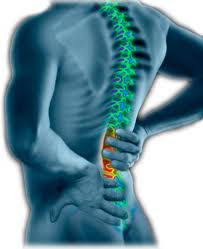
The Superion Interspinous Spacer (ISS) in an investigational medical tool designed to relieve chronic pain that’s caused by moderate lumbar spinal stenosis. Lumbar spinal stenosis is a condition that occurs when nerves in the lower back are compressed. This compression can put pressure on the spinal cord and nerve roots and cause leg, back and groin pain. ISS is a minimally-invasive alternative to traditional spinal surgery. The Superion ISS alternative doesn’t require a large incision, and can therefore minimize the amount of bleeding and trauma to the body. (SOURCE: superionstudy.com)

TREATMENT OPTIONS: According to the Los Angeles Spine Institute, lumbar spinal stenosis is the cause of leg and back pain for nearly 1.2 million Americans. However, there are several treatment options available to relieve symptoms and improve a patient's activity level. Nonsurgical treatments are typically the first line of treatment options for patients who suffer mild to moderate symptoms. This often includes physical therapy, nerve block injections, and/or medicine. When nonsurgical treatments fail to provide relief, patients are traditionally offered a spinal decompression or fusion surgery. These procedures can require a large incision to remove bone and ligaments and can result in a lengthy recovery period.

SUPERION ISS TREATMENT & RECOVERY: The Superion ISS is implanted between the spinous processes through a half-inch skin incision. Once in place, the device can act as a support column to open the passageways that contain the spinal cord and nerve roots. This reduces the compression on the nerves and can therefore relieve pain. The recovery process is typically a short one. Patients may be able to return home the same day of the surgery or may be discharged from the hospital the following day. Physical therapy is usually recommended following the surgery. The type of rehabilitation program will vary from patient to patient. Since every patient's recovery process is different, the surgeon will have to determine how much post-surgical activity is appropriate on an individual basis.

Read More

Nainital Women Turn to Herbal Medicine for Their Livelihood

Herbal Medicines
A self-help group in Uttarakhand has held a workshop to train women in preparing herbal medicines in Nainital to make them self-reliant.round 65 women from across the state participated in the workshop where they were given training in the preparation of basic herbal medicines.

Workshop instructor Supriya Negi, said that the training would be beneficial for women for both commercial and domestic purposes and will prove valuable in the absence of adequate health centers.

Read more:

Big wrists 'could be a warning of heart danger for your child'

CHILD
Parents, please note, your child's wrists could indicate whether they have a risk of
developing heart disease when they grow up, say researchers.

A new study has found that bigger the wrist size, the higher the child's resistance to insulin, a factor which could push up the chances of heart problems in later life, British
newspaper the 'Daily Mail' reported.

For the study, the researchers at Sapienza University of Rome analysed 500 overweight and obese children.
They recorded the subjects' wrist size using MRI scans or a tape measure. Having a bigger bony area, as shown in a scan, accounted for a 20 per cent increase in insulin
resistance between children.

Simply checking the width of the wrist with a tape measure, including any excess fat, was almost as reliable a pointer, according to the Italian researchers.

They claim it will be a better predictor of future problems than how much extra body fat children are carrying.

Dr Marco Capizzi, the lead researcher, said the next step was to check for a link between wrist size and insulin resistance in children of healthy weight.

Read More

Keep Your Heart Healthy For Those Who Live In It

Healthy Heart
With the recent spur in the number of heart patients, the maintenance of heart health has become a major issue for all the health experts across the world. Life is short and everyone wants to live it well. But, with so many diseases and infections ready to pounce on us, it is up to us how well we can take care of ourselves.

If medical groups are to be believed, keeping your cardiovascular health in shape is not as difficult as it sounds. All you need to do is to keep a watch on what you eat and exercise regularly.

Apart from maintaining the appropriate levels of good cholesterol, one must also control the intake of saturated fat that is present mainly in edibles like fatty meats, dairy products, biscuits, chocolate and cakes etc.

Although, the presence of cholesterol in body is very important for us, but the quantity more than requirement can cause life-threatening heart diseases.

Similarly, though fats are good as well but it is important to have less full-fat products and replace them with mono-saturated fats such as olive oil, nuts and avocado pears. The intake of less salt is also suggested in some cases.

Read More

Monday, February 28, 2011

School would track fitness, keep kids longer

health
A local charter school hopes to launch an ambitious program this fall that would keep students in school for 12 hours a day and track the impact of physical fitness on their grades.
The Let's Move Academy for freshmen and sophomores at Dohn Community High School would be the first in the region - and perhaps the nation - to track and tie health to academics, school officials say. It would also be the first mandatory after-school program in the state at a public school according to the Ohio Department of Education. It is contingent on the school winning around $130,000 in local and federal grants to help pay for it. The school will find out about its grant applications in April.
The program would combine physical fitness activities and nutrition lessons with academics, tutoring and character development classes. Dohn will also provide healthy meals for the students.
The goal is to improve students' health and in turn raise their grades and graduation rates.

Read More

Monday, February 21, 2011

Local health clinics desperate for financial savior

Health
Palm Beach County health leaders are searching for a white knight after Gov. Rick Scott zeroed out clinic care from his proposed budget for the Florida Department of Health.
So far, no rescuers are stepping forward.
The state manages seven clinics that serve vulnerable people in Palm Beach County: the uninsured, the homeless, migrant workers, those on Medicaid, those lacking a doctor.
The clinics care for pregnant women, people with HIV/AIDS, patients with chronic diseases such as diabetes, people with infectious diseases - anyone with nonemergency medical needs.
The health department saw about 67,000 clients last year from Pahokee to Delray Beach, and if the state agency pulls its $5 million contribution, the entire $30 million program risks closure or dramatic shrinkage, warned Dr. Claude Earl Fox, who heads the Florida Public Health Institute in Lake Worth.
"If the health department gets out of primary care, which it looks like it may, you are talking about 40,000 to 60,000 patients who are going to have nowhere to go," Fox said. "I am not sure the capacity exists elsewhere to handle those patients."
Fox raised the specter of hospitals routinely seeing women showing up in the ER to give birth who have never visited a doctor, kids with ruptured eardrums from untreated infections and diabetics in comas from lack of insulin.
"This is something that could affect a lot of people in a very adverse fashion," Fox said.

Wednesday, February 16, 2011

What's the key to long-term heart health?


Moderation is Jesse Weiskopf's philosophy. Weiskopf, who just celebrated his 97th birthday, never really worked out hard when he was younger.

"It's not that I worked out, but I always did something. I'm an introverted person and this is my outlet," Weiskopf said. These days, though, he goes to the gym a couple times a week.

"I don't lift hundreds of pounds. I do a little of everything. I'm just trying to be sensible and conservative."

He applies that to his diet too. "I'm not a food nut. I eat everything that's good," said Weiskopf, who tries to avoid sugar, fat and salt. "I don't eat sugar or salt if I can help it."

But moderate exercise, not a strenuous workout session, may be the best medicine, no matter what the age group. The stress of a high-intensity workout, said Dr. Henry Cusnir, interventional cardiologist at University Hospital and Medical Center in Tamarac, "raises blood pressure to levels that are not healthy" and impose stress on the aorta and heart. "It's much more harmful than beneficial," Cusnir said.

Dr. Errol Campbell, MD of internal medicine at University Hospital, said a lower intensity exercise regimen for a longer period of time is better, as opposed to a more intense exercise program done over a shorter period of time. "What is important is that you are doing some sort of exercise and avoiding a sedentary lifestyle," Campbell said.

According to the World Health Organization, in 2008 Japan tied with San Marino for the highest average life expectancy, 83.

In Japan, nowhere are the benefits of moderation more apparent than in Okinawa, which has more per capita centenarians than anywhere else in the world.

The Okinawa Centenarian Study – conducted by Makoto Suzuki, MD, PhD, Dr. Craig Willcox, PhD and Bradley Willcox MD, MS – found that elderly Okinawa residents had an 80 percent lower risk for coronary disease compared to citizens in Western nations.

Monday, February 14, 2011

Health care is subject One for local company leaders


After eating breakfast Thursday morning, local business leaders chewed on a problem that affects every company, individual and family in the state: the astronomical price of American health care and the particularly high cost in Massachusetts.
"Health care costs are probably the single biggest issue facing the commonwealth today," said speaker Andrew Dreyfus, president and CEO of Blue Cross Blue Shield of Massachusetts, at the Century House in Acushnet.
In the past, "common financial advice was you should reserve 25 percent of your income for your housing costs," Dreyfus said. "No one ever told us that another 25 percent should be reserved for health care."
Along with many others, Dreyfus was joined at the New Bedford Area Chamber of Commerce's "Good Morning SouthCoast!" meeting by Southcoast Health System officials, with whom Blue Cross Blue Shield of Massachusetts has been locked in ongoing contract negotiations for months.
"We believe we will reach an agreement soon. I'm very optimistic," Dreyfus said of the continuing discussions over reimbursement rates for care at St. Luke's, Tobey and Charlton Memorial hospitals. "The conversations have been positive, productive."
Southcoast spokeswoman Joyce Brennan, likewise, reported progress and sai

Thursday, February 10, 2011

A better diet may make kids smarter


A healthy diet filled with high intakes of nutrient rich foods could make kids smarter.
Research just published in the Journal of Epidemiology and Community Health says a poor diet high in fat; sugar and processed foods in early childhood may be associated with lower IQ's later.
The new study used the Avon Longitudinal Study of Parents and Children, which collected data on children's diet reported by parents in food-frequency questionnaires at ages 3, 4, 7 and 8.5. Dietary patterns were identified using principal-components analysis and scores computed at each age. IQ was assessed using the Wechsler Intelligence Scale for Children at 8.5 years. Complete data was available for 3966 children.
Scientists concluded:
The "processed" (high fat and sugar content) pattern of diet at 3 years of age was negatively associated with IQ assessed at 8.5 years of age. A 1 SD increase in dietary pattern score was associated with a 1.67 point decrease in IQ (95 percent CI −2.34 to −1.00; p<0.0001). p="0.001).">

Wednesday, February 9, 2011

Practical health instructions


To help prevent breast cancer, eat guyabano (soursop) or drink tea made from its bark. Another natural killer of cancer cells is curcumin, a byproduct of turmeric that can be extracted from yellow ginger. This was locally discovered by a father-and-son team of chemists, who first commercially produced it abroad before introducing it here as “picur,” or curcumin with pepper.
Intense pain
Reflexology can treat a lot of medical problems. A friend endured constant and intense pain from fibromyalgia, which rendered her bedridden. She was in so much pain that her lips and nails would turn black! She spent so much on different kinds of treatments and took pain killers for years.
My friend also has breast cancer, which was diagnosed last year. But, she doesn’t like going to hospitals and refuses traditional and conventional treatment. She’s at an age when all her organs are already weak—heart, liver and kidney—and she suffers from high blood pressure and arrythmia. All these conditions have been addressed, and she’s now stronger and better. Happily, the cancer hasn’t progressed.

Sunday, February 6, 2011

Unemployment causes health problems


A new study has shown that compared to people in employment, men and women who are unemployed suffer more often and longer from both physical and emotional complaints.

The GEDA study (Gesundheit in Deutschland Aktuell, or Current Health in Germany) was carried out in 2008-2009 by the Robert Koch Institute.

The results showed that unemployed people between the ages of 30 and 59 years are especially often affected by physical, emotional, and functional impairments such as sleep disorders, anxiety disorders, and substance addictions. As a result, the unemployed make more use of the health care system.

The health consequences of unemployment result from loss of income, loss of so-cial contacts in the workplace, or loss of social reputation.

Unemployed men and women who are supported by their partners, family members, or friends are less frequently affected by these complaints.

Friday, February 4, 2011

USC offers free flu vaccines


The Thomson Student Health Center is offering the flu vaccination free of charge to students, faculty and staff. This initiative began after the center cut the price of flu shots in half in order to increase incentive for vaccination.
Nicole Carrico, a public relations and quality assurance coordinator for Student Health Services, said February is the prime flu month for campus, and there is a vaccine surplus in the health center. Carrico added that about 4,000 vaccines were ordered and that the health center is offering the remaining 1,000 for free.
"Anticipating we're going to see a huge amount of flu on campus within the next couple of weeks, it's important we get rid of the vaccines now," Carrico said.
According to an update provided by Heather Stewart-Grant, a Thomson Student Health Center lab manager, there were 94 positive flu tests in January 2011 at the health center, and five of those were positive for H1N1, also known as the swine flu.
Last year, two different kinds of flu shots were offered at the health center — the H1N1 flu vaccine and the seasonal flu vaccine — while this year's vaccine is a combination that combats three different types of flu, Carrico said. She also added that last year, the facilities that provide the vaccine ran out, and in order to prevent a shortage this year, more were ordered.
"The whole response overall this year has been somewhat disappointing and slow at all the clinics so far, so we made [the vaccine] free," Carrico said.

Tuesday, February 1, 2011

Women still don't recognize heart attack symptoms


The government launched a new campaign today aimed at educating women about the signs of heart disease and the risks.
It happens once every minute in the U.S.: A women suffers a heart attack.
It's the number one killer among women, but according to a recent survey, when it comes to recognizing the signs of heart disease and dialing 9-1-1, women will only call if it's happening to someone else.
"Women typically are superwomen. They're for everyone but they are very unlikely to take care of themselves," said Dr. Roquell Wyche of Washington Hospital Center.
The Department of Health and Human Services has launched a new campaign called, "Make the call, don't miss a beat," to educate women on the symptoms and the risks.
Sixty percent of Caucasian women surveyed were aware heart disease is the leading cause of death for women, compared to 45 percent of African American women.
"African American women have more risk factors and poor outcomes and are less likely to know their risk factors and symptoms, " said Dr. Wyche.
Cardiologist Maria Mountis of The Cleveland Clinic points out that the signs in women tend to be different.
"The symptoms can be much more subdued. They can be anything from shortness of breath, nausea, they can have some palpitations, they can have pain that goes into their jaw or back," said Mountis.

Monday, January 31, 2011

Guidelines urge Americans to clean up their diets


Many Americans' diets are a train wreck loaded with junk food, fast food, sugary beverages and too few healthful foods.
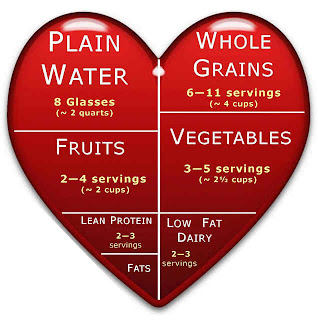
So it's no surprise that the federal government's new dietary guidelines, being released today, recommend people get back on track and eat healthier by slashing sugar, salt and solid fats such as butter and stick margarine from their diets and eating more seafood, fruits, vegetables and whole grains.
The latestDietary Guidelines for Americans, from the U.S. Department of Agriculture and the Department of Health and Human Services, are designed to help people reach a healthy weight and reduce their risk of diseases such as heart disease, stroke, diabetes and cancer.
Consume fewer calories from solid fats and added sugars.
Eat more fruits and vegetables.
Choose a variety of vegetables, especially dark-green, red and orange vegetables, beans and peas.
Consume at least half of all grains as whole grains. Increase whole-grain intake by replacing refined grains with whole grains.
Increase the amounts of fat-free or low-fat milk and milk products, such as milk, yogurt, cheese and fortified soy beverages.
Use oils to replace solid fats where possible.

Wednesday, January 26, 2011

What can you do against the flu?


What can you do against the flu?The threat from influenza is not over.
Only last week, two young people in Hong Kong were hospitalised in critical condition as a result of H1N1 flu, also known as 'swine flu'. Experts in Taiwan have also predicted that H1N1 flu could re-emerge in the island next month.
In Singapore, the number of acute respiratory infections (ARI) is reported to have hit epidemic levels, with a massive spike in patients seeking medical help.
The flu is a highly contagious viral infection that affects mainly the respiratory system - the nose, throat, and occasionally, the lungs. Most flu infections last for about a week, and have the following symptoms:
• Sudden high fever of over 38 degrees Celsius
• Nasal congestion (blocked nose)
• Chills and sweats
• Headache
• Muscle aches (particularly in the back, arms and legs)
• Fatigue and weakness
At first glance, the symptoms of the flu may seem very similar to that of the common cold. A resource on the Mayo Clinic website says that one can differentiate between the two by the onset and severity of the symptoms: "Colds usually develop slowly, whereas the flu tends to come on suddenly. And although a cold can be a nuisance, you usually feel much worse with the flu."

Monday, January 24, 2011

Lawmakers welcome mandatory health checks


The proposal to make it mandatory for lawmakers in the country to undergo annual health checks after 11 elected politicians died of wide-ranging illnesses in less than three years, has been well-received.
Kota Belud member of parliament Datuk Abdul Rahman Dahalan agreed with the suggestion but he said that medical information of the members of parliament and assemblymen should be restricted to only party leaders.
He reminded elected representatives to be cautious when travelling long hours to interior areas by boat or overland as it could take a toll on their health.
Health Minister Datuk Seri Liow Tiong Lai said on Saturday that he would soon recommend to the Cabinet for mandatory health examinations involving members of Parliament and state legislatures.
“Currently, we just let the elected representatives take the initiative to go for medical check-ups but we want to make sure that they go for at least one every year,” he said.
“We will also make sure they get reminders for the scheduled check-ups.
He stressed that the move would help Members of Parliament and state assemblymen keep tabs on their health status and ensure they were fit enough to serve the rakyat.
“If the examinations show that they are unhealthy, we will ensure they get the appropriate treatment immediately,” he said.
Since the general election in March 2008, 14 by-elections have been held with one more to be announced following the death of Merlimau assemblyman Datuk Mohamad Hidhir Abu Hassan on Thursday.
The number of by-elections so far is the highest in the country’s electoral history

Friday, January 21, 2011

Chicken pox vaccine associated with shingles epidemic


The chickenpox (varicella) vaccine was first licensed for use in Japan and Korea in 1988. After many years of development, it was licensed in the United States in 1995. Since that time, the number of hospitalizations and deaths from varicella has declined more than 90%. In 2005, a combination vaccine containing live attenuated measles-mumps-rubella and varicella (MMRV) vaccine was licensed for use in people age 12 months through age 12 years.
Goldman's research supports that shingles, which results in three times as many deaths and five times the number of hospitalizations as chicken pox, is suppressed naturally by occasional contact with chicken pox.
Dr. Goldman's findings have corroborated other independent researchers who estimate that if chickenpox were to be nearly eradicated by vaccination, the higher number of shingles cases could continue in the U.S. for up to 50 years; and that while death rates from chickenpox are already very low, any deaths prevented by vaccination will be offset by deaths from increasing shingles disease. Another recent peer-reviewed article authored by Dr. Goldman and published in Vaccine presents a cost-benefit analysis of the universal chicken pox (varicella) vaccination program. Goldman points out that during a 50-year time span, there would be an estimated additional 14.6 million (42%) shingles cases among adults aged less than 50 years, presenting society with a substantial additional medical cost burden of $4.1 billion. This translates into $80 million annually, utilizing an estimated mean healthcare provider cost of $280 per shingles case

Thursday, January 20, 2011

We're cool to health claims on food


Nearly half of Canadians don't believe health claims on food products, according to a new poll released this week.
The nationwide Ipsos Reid survey conducted last week for Global National and Postmedia News found only a slim majority -- 53 per cent -- believe health claims made on food labels. And most of these people only "somewhat agree" (47 per cent) with the statement that they believe the health claims on food labels, compared to only five per cent of Canadians who "strongly believe" that statement.
Overall, 47 per cent say they don't believe health claims made on food labels, including nine per cent who feel strongly about it. Younger Canadians aged 18-34 are the least likely to be skeptics, while those 55 years old are the most likely to distrust label claims.
Among the regions, residents of Quebec are the most likely to believe health claims (59 per cent), followed by Atlantic Canadians (54 per cent) and Ontarians (53 per cent). Western Canadians are the most skeptical, with fewer than half saying they believe health claims (47 per cent in each of the provinces).
It's not all bad news for food industry, however.
Seven in 10 (72 per cent) responded that they believe probiotics -- live microorganisms added to food products -- improve their health, while eight in 10 (79 per cent) believe that the addition of Omega-3 fatty acids to food products makes them healthier.