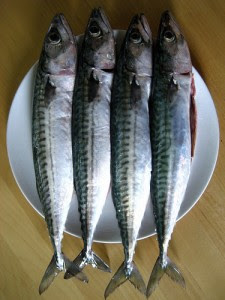
Showing posts with label Fish. Show all posts

Tuesday, October 18, 2011

Eat fish, live longer

Eat Fish
MEDICAL researchers love fish. The reason: a person who eats fish lives longer as it combats a lot of health threats.

"If you eat a modest amount of fish, you dramatically decrease your risk of dying from a heart attack," says Dr. Dariush Mozaffarian, a researcher of the Harvard School of Public Health.

Findings from 30 large studies conducted around the world show that people who consume just one or two servings of fish per week lower their risk of a fatal heart attack by an average of 36 percent.

That's good news for Filipinos as the Department of Health ranks heart disease as the number-one killer in the country. "The death toll from cardiovascular diseases in the country is about one every seven minutes," says Dr. Philip S. Chua, one of the country's top cardiologists.

Cardiovascular diseases don't affect the heart itself but also the blood vessel system, especially the veins and arteries leading to and from the heart.

If you have already a heart attack, shifting to a high-fish diet can cut your chances of future deadly attacks by one third. You see, fish contains oil that is nature's richest source of omega-3 fatty acids called eicosapentaenoic acid (EPA) and docosahexaenoic acid (DHA).

Omega-3 fatty acids are a form of polyunsaturated fat that the body derives from food. Omega-3s (and omega-6s) are known as essential fatty acids because they are important for good health. The body cannot make these fatty acids on its own so omega-3s must be obtained from food, particularly fish.

The American Heart Association suggests that a person should eat at least two servings of oily fish each week to help keep his hearts healthy. Among the fish species high in omega-3s are bas (striped), herring, mackerel (Atlantic), oysters (Pacific), sablefish, salmon, trout (freshwater), and tuna.

Shrimp may not be considered a fish but it is still seafood. One study found that people who ate shrimp everyday for three weeks had a relatively small rise in LDL (touted to be the "bad cholesterol") but an even greater jump in HDL ("the good cholesterol"). Result: Their heart disease risk actually went down.

Consuming oily fish may likewise reduce the risk of developing asthma.

In a University of Cambridge study of 770 volunteers, researchers found that those with symptomatic asthma were less likely to report having eaten fish at least twice a week throughout the year than those without asthma.

Study author Dr. Bipen Patel believes that the omega-3 fatty acids found in fish may reduce the production of substances that can cause constriction and inflammation in the airway.

The anti-inflammatory properties of fish oil have also been found to treat many medical conditions including rheumatoid arthritis.

Studies have shown that one teaspoon per day of cod-liver oil may help alleviate the symptoms of rheumatoid arthritis by providing the body with substantial amounts of vitamin D and A. Vitamin D is important for bone growth, while vitamin A may have anti-inflammatory effects. Fish oils also compete with other types of fatty acids that are believed to trigger arthritis inflammation.

So when is fish not so good for your health? Recent studies have shown that almost all fish is contaminated with trace amounts of mercury.

Mercury compounds are found in farming chemicals and in certain antiseptics and dyes. They are used heavily in industry. Most of them are released into the rivers and brought into the open sea, where fish may consume them.

Once these mercury-laden fish are consumed by human beings, the metal can be accumulated in the human body. Large doses of mercury can damage developing brains, causing learning difficulties and other problems.

Children and women who are pregnant or breastfeeding are advised to avoid some types of fish and shellfish to reduce their risk of mercury exposure.

Fish that contain the highest level of mercury are larger and older sharks, swordfish, king mackerel, and tilefish. It is probably a good idea for most people to avoid eating much of these fish. They can be replaced with other fish and shellfish such as shrimp, pollock, anchovies, catfish, clam, crab, haddock, hake, herring, salmon, sardines, shrimp, trout (freshwater), tuna, and whitefish, which all contain much less mercury.

If you are concerned about mercury, or if you just don't want to eat fish, you need to get omega-3 fatty acids from other sources. Among the plant sources are canola oil, flax seeds, walnuts, and pumpkin seeds.

The type of omega-3 fatty acids found in plants, called alpha linolenic acid (ALA), is not exactly the same as the fats found in fish, but experts say your body has the capability to transform ALA to both EPA and DHA.

Our very own tilapia has very low levels of mercury because it is a fast-growing and short-lived fish that mostly eats a vegetarian diet.

However, a study done in the United States has shown that eating tilapia is not good for those with heart problems.

"Cardiologists are telling their patients to go home and eat fish, and if the patients are poor, they're eating tilapia. And that could translate into a dangerous situation," said the researchers from the Wake Forest University School of Medicine.

The American study found farm-raised tilapia has very low levels of beneficial omega-3 fatty acid and, perhaps worse, very high levels of omega-6 fatty acids. "In a fish-farming situation, the fish that you get depends on what they are fed," explained Dr. Floyd Chilton, a professor of physiology and pharmacology and the director of the Wake ForestCenter for Botanical Lipids.

"Now if these fish are fed, as in the wild, Omega 3 fatty acids and algae, then they're going to have long-chain Omega 3 fatty acids, which are going to be incredibly beneficial. However, if these fish are fed short-chain Omega 6 products that come from corn products which are happening so often now then what one sees is the long-chain detrimental Omega 6 fatty acids. So really the fish really are what they eat and we really are what we eat as well," said Dr. Chilton, who headed the study.
Alternative Health News
Read More

Friday, September 16, 2011

50 Women Game Changers in Food: #15, Sheila Lukins and Julee Rosso


My copy of Silver Palate has seen better days, but that's always the way to find a favorite recipe....look for the dirty pages! There are quite a few of those in this wildly popular cookbook by Sheila Lukins and Julee Rosso with Michael McLaughlin. Between them, Lukins, Rosso and McLaughlin introduced many Americans to French, Southern and Eastern European cooking techniques and ingredients. 


In the 1970s, after Lukins had spent some time at the Cordon Bleu in London and had worked with chefs in France, she returned the New York and started a catering business. In 1977, she co-founded (with 
Rosso) a gourmet and catering shop in NYC called The Silver Palate. McLaughlin managed the Silver Palate and when owners Julee Rosso and Sheila Lukins decided to write their first book, he created many of the recipes. Lukins sold her interest in The Silver Palate in 1988 when it was sold to new owners and the store finally was closed in 1993.

After 11 years working together, Rosso and Lukins split up in the 1990s in a widely-reported feud, although they were reunited in 2007 to publish a new 25th-anniversary edition of The Silver Palate Cookbook. Lukins passed away in 2009. Rosso and her husband Bill own an inn in Saugatuck, Michigan. She gives cooking lessons there.


McLaughlin stayed in the background (this poor photo was hard to come by) for the most part and left the Silver Palate in 1984 when he opened the Manhattan Chili Company in New York’s Greenwich Village, a restaurant that showcased Southwestern cuisine. Michael died in Santa Fe in 2002.


To honor these "game changers" I chose to make a seafood salad I've been making for years. What I like about this recipe is you can dress it with different salad dressings. A basil 
purée or a sherry mayonnaise are the two I use the most; I like them both, or you could use any recipe for a basil pesto you may have.  I chose to use the sherry mayonnaise this time. I also like to add tomatoes as it seems to call out for some additional color.

Pasta and Seafood Salad
From The Silver Palate Cookbook

Ingredients:
1 pound raw shrimp, shelled and deveined
1 pound bay scallops, rinsed
3 squid, dressed
1/2 pound corkscrew or shell pasta (I used cavatelli here, but I do prefer corkscrew or something unusual.)
1 cup peas, defrosted
1/2 cup diced red pepper
1/2 cup minced purple onion
1/2 cup olive oil
4 Tablespoons lemon juice
salt and pepper
1 cup black olives, preferably Kalamata or Alfonso

Method:

Boil scallops and shrimp in boiling salted water for 1 minutes. Boil the squid and tentacles for 3 or 3  minutes. Then cut squid body in 1 inch rings. Be sure to use the squid tentacles! Cook pasta, drain. Mix all ingredients in a salad bowl and toss with sherry mayonnaise or the basil purée. Top with black olives. Serves 4-6.

Sherry Mayonaise
Ingredients:

1 whole egg
2 egg yolks
1 Tablespoon Dijon mustard
1/4 chup sherry vinegar
salt and pepper
2 cups corn oil
Method:
Combine egg, egg yolks, mustard, vinegar in processor. Season with salt and pepper and process 1 minute. With motor running, dribble oil in a steady stream. When done and thick, refrigerate.


Basil Purée
Ingredients:
7 cups washed and dried fresh basil leaves
3-4 tablespoons olive oil
Method:
Purée in a food processor, cover and refrigerate

Monday, September 12, 2011

Classic Bouillabaisse


While my daughter was here last month, she asked if we could make bouillabaisse; she'd always wanted to. We sat down, perused my cookbooks and finally surfaced with a recipe from Eric Ripert's Avec Eric


It's definitely a classic. Tracy made the rouille first and refrigerated it. A couple days later, we bought our fresh seafood, made the fish stock in the morning and the bouillabaisse for dinner. It was fun and fabulous, but..... we were disappointed with the rouille....not nearly flavorful enough. It lacked pizzazz.  So the next day, we punched it up with a few additions and ate it for lunch. Huge improvement. I've made our corrections in the recipe below.

Below, the bouillabaisse was served in a large family style dish with a heaping spoonful of Eric's rouille in the middle. The second photo was taken the next day, after we made our changes to the rouille and this time we mixed it into our individual soup bowls. 

Bouillabaisse
Adapted from Avec Eric by Eric Ripert


Ingredients:


For the bouquet garni
:
3 Italian parsley sprigs
2 thyme sprigs
1 bay leaf
1  1/2 teaspoons black peppercorns

For the bouillabaisse:

4 tablespoons olive oil
2 pounds fish bones and parts from white-fleshed fish such as halibut or monkfish
2 tablespoons tomato paste
1/2 cup Pernod
1 onion, diced
1 stalk celery, diced
1 small fennel bulb, diced
3 garlic cloves, sliced
1 cup diced tomato
1/2 cup dry white wine
large pinch saffron threads
fine sea salt and freshly ground white pepper
12 small new potatoes, peeled and cut in half
1 small leek, tender green parts only, cut in 1/4 inch dice
1/2 cup diced fennel
1/2 cup diced onion
1/2 pound firm white fish filet such as monkfish or halibut, cut in 2 inch chunks
1/2 pound large shrimp, peeled and deveined
1 pound mussels and/or clams, scrubbed, soaked and mussels debearded
country white bread
rouille (recipe follows)

Method:

Wrap the parsley, thyme, bay leaf and peppercorns in some cheesecloth and tie. Set aside.
Heat the olive oil in a large pot and add the fish bones and parts and saute for about 5 minutes. Add the tomato paste and saute another minute or so. Delaze with the Pernod and add the onion, celery, fennel and garlic and saute until the vegetables are soft, stirring often, for 10 minutes.
Add the diced tomato, wine and saffron and enough water to cover the ingredients. (about 5 cups) Add the sachet and cook for about half an hour. Remove the sachet and any large fish bones and season with salt and pepper.
With an emersion blender (I did mine in my processor) puree the soup and then strain through a fine mesh seive.
Place the soup in a medium pot over medium heat and add the potatoes, leek, fennel and onion and simmer until tender, about 10 minutes.
Add the clams and simmer another 5 minutes. Season the fish and shrimp with salt and pepper. Add the shrimp to the bouillbaise and cook until they turn pink. A couple minutes. Add the fish along with the mussels and simmer until the fish is barely cooked and the mussels are opened.
Serve the bouillbaise over toasted country bread with the rouille. Serves 4.


The Rouille:


Ingredients:

2 tablespoons water
1 teaspoon saffron threads
2 large egg yolks
3 tablespoons fresh lemon juice
2 garlic cloves, finely minced
1/2 roasted and peeled red pepper, finely diced
1/4 cup finely chopped parsley
fine sea salt and freshly ground white pepper
6 tablespoons canola oil
6 tablespoons olive oil
large pinch of cayenne pepper (more to taste, or use harissa)

Method:

Combine the water and saffron threads and allow to soak until the saffron threads are moist, about 5 minutes or so.
Place the saffron mixture along with the egg yolks, lemon juice and garlic in a blender. Season with salt and pepper and blend about 30 seconds. With the machine running, add the canola and olive oils slowly, creating a thick emulsion.
Remove from blender, add the red pepper, parsley and cayenne to taste. Transfer to a sealed container and keep refrigerated for up to a week.

Friday, July 22, 2011

Good Fish, Bad Fish

Good Fish
Fish is an excellent source of lean protein and omega-3 fatty acids called eicosapentaenoic acid (EPA) and docosahexaenoic acid (DHA).

A diet rich in fish oil may help reduce inflammation and decrease your risk of cardiovascular disease. The omega-3 fatty acids found in fish are also essential for brain and eye development. The American Heart Association suggests that we each eat at least two servings of oily fish each week to help keep our hearts healthy.
So when is fish not so good for your health?

Almost all fish is contaminated with trace amounts of mercury. While most healthy adults have no problem eliminating the mercury from their bodies, children and women who are pregnant or breastfeeding should avoid some types of fish and shellfish to reduce their risk of mercury exposure.

Fish that contain the highest level of mercury are larger and older sharks, swordfish, king mackerel, and tilefish. It is probably a good idea for most people to avoid eating much of these fish. They can be replaced with other fish and shellfish such as shrimp, pollock, canned light tuna, salmon and catfish, which all contain much less mercury.

Most other fish fall somewhere in between. The United States Environmental Protection Agency has a complete listing of the mercury levels in commercial seafood and fish. It is also interesting to note that deep-frying fish may increase the concentration of mercury in fish.

Besides mercury, fish can be a problem if it isn't prepared properly. Deep fried or served with a heavy, fat- and calorie-dense sauce will turn healthy fish into an unhealthy meal fast.

Read More

Sunday, May 8, 2011

Latin Cuisine- Week 5


We were still in South America this week for Latin. We had an extremely short menu this week. One of the things we were focusing on was preparing the Ceviche de Pescado (Fish Ceviche.)

Ceviche is a technique in which you "cook" a food using acid, such as lemon or orange juice, instead of heat. In some instances, you may partially cook the item in boiling water and then finish it off with the lemon juice, which has been the case with shrimp so far every time I have encountered this technique. Our team worked together to prepare the Ceviche so it would have the maximum amount of time in the "cooking" liquid. I learned two things at the end of this dish. First, the fish should have been cut into smaller cubes for the time we had in class. Our fish cooked ALMOST all the way through, but not completely. If they had been smaller pieces, we would have had more success. Second, the recipe called for 4 oz of lemon juice and 2 oz of lime juice. There are always plastic containers of lemon juice and usually lime juice on our staples cart. We used these instead of FRESH lemons and limes. When making Ceviche, we learned after the fact, you should ALWAYS use fresh. It makes a gigantic difference in the flavors.

Also prepared this week was Shredded Beef with Beans, White Rice, and Fried Plantains. I tackled the rice this week. In doing so, I learned something very important. If you have been following my blog at all, you will know that I can cook rice perfectly if I am cooking it as needed. If I have had to hold it for service, however, I was not doing so well. Since rice is such a huge part of Latin food, I had a feeling Chef Heidi could help me. I admitted, embarrassed, that I had yet to fully successfully hold rice, and if she had any tricks for me. Oh my goodness! It's SO EASY. Chef taught me to cook the rice to where you need it to be, then place it in a bain marie covered in plastic wrap, place it in a hotel pan that has WARM water running into it. It hold it at a temperature where it's warm, but it isn't so warm that it is continuing to cook! Amazing!!! So my rice came out perfectly. The beef and beans were well prepared and hearty, and I never really like fried plantains unless they are sliced extremely thin and more like chips.

Monday, January 31, 2011

Sophie's Mushy Peas with Seared Scallops


Ahem. Please take note: I am throwing a healthy dinner into the mix of  Super Bowl snacks and Valentine Day sweets. Have I mentioned I am still watching my diet after the indulgences of the holidays? And this certainly fits the bill. Scallops are my favorite seafood and I much prefer them simply prepared. Oh, I can do sauces and other garnishes
 for guests, but I like easy, lo-cal and fast for myself. So searing with a little prosciutto around them is my favorite way to serve them. Simplicity itself.

When I got Sophie Dahl's book last year I remember reading this particular recipe and thinking what a great idea it was. I love peas, but they are so unruly on a plate. In a salad? Fine. On a plate? No thanks. Here's the answer: Sophie's version of Mushy Peas, a British classic. You've got to try this.....and don't you just adore 
crème fraiche? Yum. I'm in love with these mushy peas! With any kind of seafood, it's delicious. I just happen to prefer scallops and this makes such a pretty presentation....even if it is just for me.


Char-grilled Scallops on Pea Purée
Adapted from Miss Dahl's Voluptuous Delights by Sophie Dahl


Ingredients:

The peas:
2 cups frozen peas

1 tablespoon butter
1 tablespoon chopped fresh mint
1 tablespoon crème fraiche
Kosher salt and freshly ground pepper

The scallops:

Olive oil
4 ounces prosciutto, cut into 16 one inch strips
8 scallops
2 teaspoons lemon zest
1 teaspoon dried red chili flakes (optional)


Method:

Cook the peas in boiling water for 5 minutes. Drain and put in a food processor. Add the butter, mint and crème fraiche. Purée. Keep warm until ready to serve.

Wrap each scallop with a thin slice of prosciutto. Secure with a toothpick. 
Heat the olive oil in a large skillet over medium-high heat. Place the scallops into the pan and cook for about 2 minutes on each side until well browned. Season each side with salt and pepper as it is cooking. When nearly done, throw in the zest and chili flakes. Serve immediately over the puréed peas.  Serves 2-3.

Monday, January 25, 2010

Condos and Crabmeat

Have I mentioned I live in a condominium? It was the first one built in the U.S. That's right: the first. We have the plaque to prove it. Not a co-op, those were around way earlier, but the first condo. And this is not one of those ghastly high rises which came later, worse luck, but a city block of several smallish, pastel-colored buildings on A1A, which means the ocean is right across the street. I've lived here a while and condo living (or any apartment living for that matter) is often dicey. My father's advice: don't make waves.

Normally, I don't. But..... it's all about a new fire alarm system the city says we have to install. I have no objections to complying with code but with who will do the installing. The Board chose an expensive company...costing nearly $60,000...and did not bother to look further. Appalled, we got another bid from a well-regarded company, $20,000 less for the same work. The Board refused to meet with them, discuss their references or consider their bid and informed us they had signed a contract with the other firm and that was that. Go away.

I really do hate arrogance.

So, the upstarts in Building A (that's us) made waves. We wrote letters; we asked for arbitration; we ignored the invoice; and we finally refused access to our apartments. Our entire building was on the same page. Which is nothing short of amazing. The end result? Threatening letters from Board attorneys (which we pay for) and finally a notice that the city would start fining us $500 for each day the work was not in progress. Request for arbitration is law but the Board informed us by registered letter we would have to pay all attorney fees and any fines while waiting for arbitration and ditto if we lost. Dicey indeed. It may well end up costing more than the savings we hoped for. It. Just. Ain't. Fair.

Most of us caved. Some did not, but they haven't a hope in hell of beating the system. It's gonna happen. Work has begun on the willing (I use the word loosely) apartments. There'll be stobe lights, klaxons, speaker systems telling you to get out! get out! and if this ever goes off in the night, just dial 911- forget the fire- because I will have had a heart attack. The equipment is 5 feet from the head of my bed.

Are you ready? I now have 4 fire alarm systems:

1. Was here when I moved in and will eventually be disconnected (I assume), though the detectors will not be removed.
2. Was installed by my home alarm company. More detectors, active.
3. Was added when the fire department came by and told us we needed to install some extra battery operated ones a few years ago. Still more active detectors.
4. The brand new one. Detectors galore.


What d'ya think? Overkill?
I need a drink.

And just what has this to do with Crabmeat? Not much, except I had company coming for dinner and had to work around installers, ladders, boxes of tools and coils of wire in the kitchen. It was a near thing, but I pulled it off.

My Deviled Crab was on the menu and it's a really old recipe; so old, I have no idea where I found it. Do you remember the funky clam shells we used to serve our crab dishes in? When I first started making this recipe, I used them. That's how old. Mine turned yellow and cracked so I finally got rid of them. It's an interesting combination of ingredients but the most important tip is to use really fresh crabmeat. And then haul out your old clamshells!


Stuffed Deviled Crab


Ingredients:

1 pound fresh crab, flaked
4 tablespoons lime juice
2 teaspoons onion pulp (I grate mine)
1 teaspoon freshly ground black pepper

2 or 3 dashes Tobasco
Salt to taste
2 tablespoons butter
2 tablespoons chopped onion
2 tablespoons chopped green pepper
1 small tomato, chopped
1 clove garlic, minced
1 tablespoon chopped fresh parsley
Pinch dry mustard
Pinch mace
Pinch dried basil
2 tablespoons light rum
2 tablespoons fine breadcrumbs
Cracker crumbs

Grated Parmesan cheese

Method:

In a bowl mix the flaked crabmeat, the lime juice, onion pulp, black pepper, Tobasco and salt to taste. Cover and refrigerate for a couple hours before serving.


In a skillet melt the butter and add the chopped onions, green pepper, tomato, the garlic and the parsley. Sauté until the vegetables are tender. Add the dry mustard, mace, basil, rum and breadcrumbs. Stir over low heat for a couple minutes.

Add the crab mixture to the stuffing and heat, stirring, for about 5 minutes. Remove from heat and pack into cleaned crab shells or individual ramekins. Sprinkle with a mixture of cracker crumbs and Parmesan cheese. Dot with butter and bake in a 350° oven until the top is browned and everything is heated through, 5-10 minutes.
Serves 6.

Sunday, June 21, 2009

Good Things Come In Small Packages

Is sea bass one of those fish we're not supposed to eat? It’s confusing. And no wonder. First it was the “in” fish; then environmentalists got the word out about overfishing and sustainability. As a result, many chefs banned it from their menus. Now once again it's on menus everywhere AND in Gourmet magazine where I found this recipe so I'm guessing it’s OK to eat. Right?

I do love fish- any kind – cooked any old way, but I’m always on the lookout for unusual recipes. And I am not much for sauces, especially when I am watching calories. I want something simple, fast, lo-cal and delicious- yet something spectacular enough to serve to company. That’s the trick. Elegant enough for company without appearing like a skimpy diet dinner.

Well, here's a winner. Gourmet’s May 2009 issue has one of their “quick kitchen” recipes called Sake Sea Bass in Parchment. It looked like such a fun presentation and after reading the ingredients I didn’t see how it could go wrong. (Unless someone’s going to tell me I bought illegal fish from Whole Foods- which I greatly doubt.)

Since I found this recipe I've made it again and again. It's addictive. It’s perfect for dinner serving one or two as well as great fun for company. Just add a salad, a veggie and you’re done. Lovely.

Sake Sea Bass In Parchment
(Adapted from Gourmet Magazine, May 2009)


Ingredients:
1/2 cup sake
1 1/2 tablespoons soy sauce
1 teaspoon grated peeled ginger
1 teaspoon sugar
6 (6 ounce) pieces skinless sea bass fillet (about 1 inch thick), any bones removed
1/2 cup sliced scallions
6 (12 to 15 inch) squares white parchment paper and kitchen string

Method:
Preheat oven to 400°. Put a baking sheet on the bottom rack.
Stir together the sake, soy sauce, ginger and sugar in a bowl.
(If fish fillets are more than 4 inches long, fold the ends under.)
Place a fish fillet in the center of each piece of a parchment square and season very lightly with salt. Working with one fillet at a time, sprinkle each portion of fish with scallions and then spoon some of the sake sauce over the top, holding two corners of the parchment paper to stop liquid from spilling out.
Gather the corners of each piece over the fish to form a pouch, leaving no openings and tie tightly with string.
Repeat with the other portions.
Place on the hot baking sheet and bake until fish is cooked through, about 10 to 12 minutes. Cut the string, open carefully and enjoy! Serves 6.


Wednesday, December 31, 2008

Stone Crabs: One Last Splurge

Happy 2009! Can you believe it?

Well, here goes: this year I will try to- be more frugal; stick to a diet; be more patient; listen; pour more love and encouragement on those precious to me; be a better friend. These are not resolutions but merely a little list for myself. I think I can manage to accomplish most of it. The hardest part for me is always dieting. Not so easy.

My daughter will be returning to New York City Monday.... I will miss her very much. She has a contemporary art gallery there (see "My Favorite Websites" below) and the art market has not been all that great lately. I am crossing my fingers that all the naysayers will be wrong in their predictions for 2009. This gallery is Tracy's dream and she works like mad to make it a success, which it has been for several years. I know, everyone is having problems with the economy and everyone is working hard to keep their dreams alive. But we mothers worry about all our kids, we can't help it and no matter how grown up they are, this will never change. I worry about my sons just as much. Little kids, little problems; big kids, big problems. Can't remember where I first heard that, but it sure is true.

So, in keeping with our diet promises (But our frugal promises? Not so much.) I decided to surprise Tracy on New Year's Day with her all-time favorite: stone crabs. Delicious and aren't the colors to die for? And best thing yet, no work. They are cooked and cracked and ready to go.


To accompany, we always use a recipe I found years ago in the Miami Herald for Joe's Mustard Sauce. The Joe I speak of is -need I say it- Joe's Stone Crab, the famous Miami restaurant where stone crabs are king. And the rest of their food is pretty regal too. Now I have no idea if this recipe is really Joe's or not. The paper claimed it was and we think it's pretty close to the real thing, so that's what we call it, with mea culpas to Joe's if it's not.

Joe's Mustard Sauce

Ingredients:
3 and 1/2 teaspoons dry English mustard (like Coleman's)
1 cup mayonnaise
2 teaspoons Worcestershire sauce
1 teaspoon A-1 sauce
1/8 cup light cream
1/8 teaspoon salt

Method:
In a small bowl beat the dry mustard and mayonnaise until blended. Add remaining ingredients and chill until ready to serve. Makes 1 cup.


We needed a salad as well, so I made some Broccoli Slaw. It's pretty, you can make it ahead, although it is a simple recipe to begin with, tasty and the perfect foil for the stone crabs. My friend Polly originally gave me the recipe so I named it after her. You don't need another thing- perhaps some white wine and for those who wanted dessert I pulled out what was left of my Apricot and Nut Cookies. Yum! What a great start for 2009.

Polly's Broccoli Slaw

Ingredients:
1 pound broccoli slaw (you can find it in your market)
1 package cole slaw
6 green onions, sliced
2 tablespoons sesame seeds, toasted
1/2 cup slivered almonds, toasted
2 packages ramen chicken soup mix
1 1/2 cups salad oil
2 1/2 Tablespoons sugar
2 teaspoons salt
1 teaspoon pepper
6 tablespoons red wine vinegar

Method:
Mix the first five ingredients and refrigerate. Make a dressing with oil, vinegar, sugar, salt and pepper and 1 1/2 packages of the seasoning mix in the soup packet. Mix well. Just before serving, crunch up the noodles of both packages and add to the slaw. (I put them in a plastic bag and pound them with my rolling pin) Pour dressing over and serve.


Monday, December 22, 2008

A Plea to Give Up Fish

In his lively look back on his activist life, Committed: A Rabble-Rouser's Memoir, Dan Mathews, the senior vice president of PETA, describes a fishing trip he took in the ninth grade, just a few weeks after being bullied for being gay. He discovered, to his dismay, he had caught a flounder.

"'You've got a booby prize!' someone joked as he stomped the flailing fish to the deck and tore out the hook, causing blood to flow from the slimy creature's mouth to the beat of his racing heart. Everybody laughed, but I grew uneasy. I considered what the scene looked like from the flounder's point of view. Stunned, he looked up to see a collection of chuckling faces as he lay gasping for breath...I had become one of the terrorizing bullies I dreaded so much at school."

More than 17 billion fish are killed for food in the U.S. annually, and sport fishing and angling kills another 245 million animals per year, according to PETA's Fishing Hurts web site. Much like their farm animal counterparts, they have no legal protection from cruel treatment. They are impaled, crushed, suffocated, or sliced open and gutted...all while they're fully conscious.

For whatever reason, fish is the one flesh many vegetarians struggle to give up. Perhaps because there isn't as much graphic footage available of their horrible treatment. Or maybe because we've succumbed to the marketing of the industry touting it as a health food. But did you know seafood is the leading cause of food poisoning in the U.S.? So many of our waterways are polluted with human and animal feces, and this waste carries dangerous bacteria like E. coli, according to PETA.

Mercury is in the news as of late due to actor Jermey Pivens' bout with mercury poisoning due to a twice-a-day fish consumption lifestyle. PETA noted a study by the Environmental Protection Agency that revealed that women who ate fish just twice a week had blood mercury concentrations seven times higher than women who had not consumed fish in the prior month.

Meanwhile, commercial fishers have destroyed the ocean's ecosystem to the extent that large fish populations are just 10 percent of what they were in the 1950s.

Please consider shunning fish once and for all, for the health of your body and of our oceans, and for the long-suffering fish.

Learn more about the health, environmental, and moral impact of consuming fish by visiting PETA's Fishing Hurts web site.
Check out Dan's book, available at your local library, or through the PETA catalog.