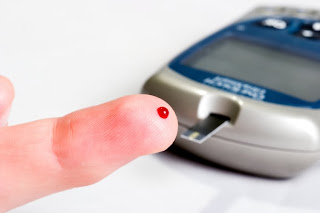
Showing posts with label Blood Sugar. Show all posts

Wednesday, October 12, 2011

Useful Tips to Control Blood Sugar Level

Blood Sugar Level
Blood sugar level is the concentration of sugar in blood, which is present on the form of glucose.

Whenever you eat food, it is the task of the body to break down that food in usable form of energy. The carbohydrates present in the food get broken down into glucose which are then made available to the body cells through the blood stream and thus provide energy. The increase in this level of glucose in blood leads to a disease known as diabetes.
Blood sugar levels can be managed in the following ways:

1. Sugar intake must be checked. Avoid food high in sugar content. Product labels must be checked before buying for their constituents.
2. Diet must consist of fibers. Foods like nuts, olive oil contain monosaturated fats and must be regularly taken. Fruits and vegetables are highly recommended. Avoid food that contains high Trans fatty acids and fat dairy products.

3. Exercise regularly. It helps in breaking down the sugars present in the body. Another useful mean of controlling blood sugar level is by losing weight through exercises.

4. Keep a tab on your cholesterol level. This is another factor that should be taken care of along with blood sugar level.

5. Alcohol intake must be reduced. Alcohol contains high amount of calories and carbohydrates that can shoot up the blood sugar level.
6. Multivitamins and supplements can be taken. Vitamin C, E, Zinc and magnesium are very good for diabetic people.
7. Stress and anxiety must be avoided. Relaxation exercises and deep breathing are great in reducing stress.
8. Keep a regular check on your blood sugar level. Get it tested periodically and maintain a record of the changes in its level.

Blood Sugar Test Normal Range
A1C < 7.0%
Preprandial Plasma Glucose (before a meal) 70 - 130 mg/dl (5.0 - 7.2mmol/l)
Postprandial Plasma Glucose (after a meal) < 180 mg/dl (< 10.0mmol/l)

Healthy Soup

Alternative Health News

Read More

Monday, May 2, 2011

Tradjenta Approved for Type 2 Diabetes

Blood Sugar
Tradjenta (linagliptin) tablets, combined with diet and exercise, has been approved by the U.S. Food and Drug Administration to control blood sugar in people with type 2 diabetes, the agency said Monday.
Click here to find out more!

People with type 2 diabetes don't produce the pancreatic hormone insulin, or don't respond to it properly. Insulin helps control the levels of sugar (glucose) in a person's blood. People with too much blood sugar at are risk of serious complications including heart disease, blindness, kidney damage, and nerve damage, the FDA said in a news release.

Type 2 diabetes is the disease's most common form, affecting up to 95 percent of the estimated 24 million people with diabetes in the United States, the FDA said.

Tradjenta boosts hormones that stimulate the release of insulin after a person eats. The drug was evaluated in clinical trials involving 3,800 people with type 2 diabetes. The most common adverse reactions reported included upper respiratory infection, stuffy nose, sore throat, muscle pain and headache.

Tradjenta should not be used by people with type 1 diabetes or by those who have above-normal levels of ketones in their blood or urine, the agency advised.

The drug is co-marketed by Ridgefield, Conn.-based Boehringer Ingelheim Pharmaceuticals and Indianapolis-based Eli Lilly and Co.

Monday, April 4, 2011

Drinking coffee with a high-fat meal 'can raise blood sugar to harmful levels'

Coffee
Drinking coffee after a high-fat meal can raise your blood sugar to potentially harmful levels, a study has found.

Not only are blood sugar levels increased after a fatty meal, but the rise doubles if the meal is followed by caffeinated coffee, researchers discovered
The study used a specially prepared drink containing molecules of fat, known as lipids, enabling researchers to mimic what happens to the body when fat is ingested.

Healthy men drank about one gram of the fat beverage for every kilo of body weight. Six hours later they were given a sugar drink. Typically when sugar is ingested, the body produces insulin, which takes the sugar out of the blood and distributes it to muscles.

But the researchers, from the University of Guelph in Canada, found fat affected the body’s ability to do this. Blood sugar levels were 32 per cent higher than they were when the men had not ingested the fat cocktai


Read more: