Working in consultation with the United States Food and Drug Administration, Rite Aid has initiated a voluntary chainwide recall of approximately 85,000 tins of butter cookies distributed by Rite Aid under the Rich Fields brand name because of the possibility of contamination with Bacillus cereus. This microorganism may cause diarrhea, nausea and/or vomiting; however, the possibility of serious adverse health consequences is remote.
This recall affects only 12 oz. tins featuring either a decorative castle or Christmas designs and sold exclusively in Rite Aid stores. Affected products can be identified by the UPC codes 01249596519 and 88411804619 located directly beneath the bar code on the bottom of each tin. No other Rich Fields or Rite Aid brand products are affected by this voluntary recall.
The recall was initiated after the company conducted quality testing on the affected product because of an uncharacteristic odor. Customers should not eat the cookies and can return them to any Rite Aid store for a full refund.
Source: fda.gov
Tuesday, November 1, 2011

Malaria Overview

 Malaria is caused by a parasite that is passed from one human to another by the bite of infected Anopheles mosquitoes.
After infection, the parasites travel through the bloodstream to the liver, where they mature and release another form, the merozoites. The parasites enter the bloodstream and infect red blood cells.
The parasites multiply inside the red blood cells, which then break open within 48 to 72 hours, infecting more red blood cells. The first symptoms usually occur 10 days to 4 weeks after infection, though they can appear as early as 8 days or as long as a year after infection. The symptoms occur in cycles of 48 to 72 hours.
Most symptoms are caused by:
The release of merozoites into the bloodstream
Anemia resulting from the destruction of the red blood cells
Large amounts of free hemoglobin being released into circulation after red blood cells break open
Malaria can also be transmitted from a mother to her unborn baby (congenitally) and by blood transfusions. Malaria can be carried by mosquitoes in temperate climates, but the parasite disappears over the winter.
The disease is a major health problem in much of the tropics and subtropics. The CDC estimates that there are 300-500 million cases of malaria each year, and more than 1 million people die from it. It presents a major disease hazard for travelers to warm climates.
In some areas of the world, mosquitoes that carry malaria have developed resistance to insecticides. In addition, the parasites have developed resistance to some antibiotics. These conditions have led to difficulty in controlling both the rate of infection and spread of this disease.
There are four types of common malaria parasites. Recently, a fifth type, Plasmodium knowlesi , has been causing malaria in Malaysia and areas of southeast Asia. Another type, falciparum malaria, affects more red blood cells than the other types and is much more serious. It can be fatal within a few hours of the first symptoms.
Alternative Health News
Read More
Twice Stuffed Sweet Potatoes
Would you just look at that date? November 1st! Where did October go? And all of you in the northeast U.S. are probably wondering where fall went. Snow before Halloween. Amazing.
Thank heaven we don't have snow, but it hasn't stopped raining here in South Florida for days. And I mean a near-constant deluge. It's all remnants of Hurricane Rina. Well, weather like this has made me do some organizing around the house and some cookbook and magazine reading; and it's gotten me thinking about the (coming sooner than we think) holidays.
I was glancing through Fine Cooking Magazine and came across an intriguing sweet potato recipe. Every Thanksgiving, I invariably serve them in some form or another, sometimes savory, sometimes sweet, sometimes an old fashioned southern sweet potato pie. (I remember my mother used to make those mashed sweet potatoes with orange juice and topped with marshmallows back in the 50's. Anybody else remember that?)
So I decided on a test run, which I do when company's coming. Not so much when it's family. They're forgiving. :) It was fabulous! Creamy sweet potatoes with sour cream, divine browned leeks and sweet sausage. And because I had some left over, I refrigerated them without the Gruyère and the next night, grated some on top and reheated them in a hot oven. Tasted great, so you could make these ahead....a real plus for a holiday dish.
Twice Stuffed Sweet Potatoes with Leeks and Sausage
From Fine Cooking Magazine, December/January Issue

Ingredients:
4 small sweet potatoes (about 8 oz. each)
1 Tbs. olive oil
1/2 lb. bulk sweet Italian sausage (or link sausage, casings removed)
1 Tbs. unsalted butter
1 lb. leeks, white and light-green parts only, quartered lengthwise and thinly sliced (about 2 cups)
1 tsp. chopped fresh sage
1/4 tsp. chopped fresh thyme
Kosher salt
1/2 cup sour cream
1/4 cup grated Gruyère
Method:
Position a rack in the center of the oven and heat the oven to 375°F. Line a heavy-duty rimmed baking sheet with parchment or foil.
Poke the sweet potatoes a few times with the tip of a knife and arrange them on the baking sheet. Bake until completely tender when pierced in the fattest part with a skewer, 35 to 60 minutes.
Meanwhile, heat the oil in a 10-inch skillet over medium-high heat. Add the sausage, reduce the heat to medium, and cook, breaking it into small bits with the edge of a slotted spoon, until no longer pink, 5 to 6 minutes. Transfer to a plate and set aside.
Pour off all but 1 Tbs. of the fat and add the butter. When it melts, add the leeks, sage, thyme, and 1-1/2 tsp. salt. Cook, stirring stirring, until the mixture just starts to sizzle. Reduce the heat to low and cook, stirring frequently, until the leeks are very soft and starting to turn golden, 10 to 15 minutes.
When the sweet potatoes are cool enough to handle, carefully cut them in half lengthwise and gently scoop the flesh into a medium bowl, leaving about 1/8 inch of flesh in the shells. Mash the scooped flesh with a fork or potato masher until smooth. Stir in the sour cream and 1 tsp. salt. Fold the sausage and leeks into the mashed sweet potato and season to taste with salt.
Position a rack 6 inches from the broiler element and heat the broiler on high. Mound the filling into the potato skins and top with the cheese. Put the potatoes in a 9x13-inch baking dish and broil until the cheese is golden, about 4 minutes. Serve immediately.

Monday, October 31, 2011
Pumpkin One on One
Ok, now you have a few pounds of pumpkin at home, you know they are very nutritious and healthy, but are not sure what to do! Here is a guide from Eating well and a few recipes from various sources to help you make the most of them!

What type of pumpkins can I use for cooking?
Jack-o-lantern pumpkins are great to carve, but too watery and stringy to enjoy eating. Go with sugar pie, baby bear and cheese pumpkins instead. To make easy work of cooking a pumpkin, start it in your microwave for 2 minutes. Then, cut the pumpkin in half with a sharp knife and scoop out the seeds and stringy pulp. Next, place the pumpkin halves, cut side down, on a baking sheet pan and roast in a preheated 375F oven the pumpkin flesh is tender, which takes about an hour. When the pumpkin is cool enough to handle, scoop out the tender pulp to use in your recipe.
What's the best way to roast a pumpkin?
Roasting a pumpkin may sound like a daunting task, but it's really not. First, microwave a pie pumpkin on HIGH for 2 minutes. Then, carefully cut the pumpkin in half (you'll need a sharp knife), and scoop out the seeds and stringy pulp. Next, heat your oven to 375º. When it's nice and hot, place the pumpkin pieces (cut sides down) in a 13- x 9-inch pan. Cover and roast them for up to an hour, or until tender. Cool and scoop out the tasty pulp, and then use it as directed in your recipe.
What is the difference between canned pumpkin, pumpkin pie filling, and pumpkin puree?
Canned pumpkin is just that and nothing more: cooked, pureed pumpkin. Pumpkin pie filling is flavored with spices like cinnamon, clove, allspice and ginger, and is also sweetened. It is a “convenience food” for making short work of pumpkin pie. Pureed pumpkin or canned pumpkin may be used for many dishes besides pumpkin pie, including delicious soups and pastas.
Check out the recipes below:
Pumpkin Soup with Bell Pepper and Paprika
Pumpkin (or Butternut Squash) Cookies
Pumpkin Mousse Pie
Sources: Various, including MyRecipes.com and Yahoo
Super Powerful Antioxidants from Unexpected (and Affordable) Sources
When we talk about antioxidants we usually think about blueberries, cinnamon and spinach. Well, surprise, surprise! Check out the list below of super powerful antioxidants, all at your fingertips!
From Prevention Magazine:
From Prevention Magazine:
1. Whole Grain Pasta
Whole grain versions of pasta (whole wheat should be listed as the first ingredient) have 3 times more antioxidants than enriched or refined varieties, found Vinson’s study at the University of Scranton. He and his team compared the enriched or refined with the whole grain versions of three spaghetti brands.
2. Popcorn
Popcorn has 4 times more polyphenols—powerful cancer-fighting plant compounds—than the average amount found in fruits, says Vinson, who tested several whole grain foods to measure antioxidant levels. “When air-popped at home, it’s a 100 percent whole grain food, so it’s not a complete surprise that it’s packed with polyphenols,” he says.
3. Eggs
Eggs aren’t commonly considered a rich source of the antioxidant lutein (which protects your eyes from macular degeneration and cataracts) because they have low concentrations of it, relative to top sources such as spinach. However, scientists at the Jean Mayer USDA Human Nutrition Research Center on Aging at Tufts University discovered that the lutein in egg yolks is absorbed more effectively than that in spinach, possibly because the yolks’ fat helps our bodies process the antioxidant much better. So even though one egg has only about 5 percent of the lutein found in just 1/4 cup of spinach, we absorb it 3 times more effectively, explains Elizabeth Johnson, PhD, coauthor of the Tufts study. “Spinach and other leafy greens are still the best sources, but whole eggs are another easy way to get more lutein,” she says.
4. Beans
A 2004 study conducted by the USDA found that certain varieties of dried beans contain high levels of antioxidants, but Americans commonly eat more canned beans, observes scientist Mark Brick, PhD. To find out if canned have as many antioxidants as dried, Brick and a team of researchers at Colorado State University measured the phenolic and flavonoid contents of several types of canned commercial beans for a 2009 study published in Crop Science. The scientists found that while all canned beans contain antioxidants, small red beans have the highest levels, followed closely by dark red kidney and black beans. In fact, darker canned beans have as much as 3 times more phytochemicals—plant compounds that wipe out free radicals to protect your cells and repair DNA damage—than white kidney and great Northern beans.
5. Yogurt
Love yogurt? You’ll love this stat: Just 1 cup of low-fat plain yogurt provides at least 25% of the daily value for riboflavin—the same that’s in 1 cup of boiled spinach. While not an antioxidant itself, riboflavin (a B vitamin) is critical in promoting antioxidant activity. Without it, the antioxidant glutathione—which is already in our cells—cannot destroy free radicals, which may lead to an increased risk of heart disease, cancer, and other chronic conditions. Because riboflavin is water soluble, it remains in the body only a few hours and must be replenished daily; yogurt does the trick.
6. Canola Oil
Heart-healthy canola oil (which is less expensive and milder tasting than olive oil) is rich in the antioxidant alphatocopherol, according to Maret Traber, PhD, of the Linus Pauling Institute at Oregon State University. Just 1 tablespoon contains 16 percent of the DV. Alphatocopherol is one of eight antioxidants in vitamin E, which scientists have found keeps the fats in “bad” LDL cholesterol from oxidizing and forming free radicals, potentially leading to cardiovascular diseases and other chronic conditions. Turns out, though, we aren’t getting enough of this potent antioxidant. Close to one-third of women have low concentrations of alpha-tocopherol, say researchers who looked at data from a national nutrition survey conducted by the CDC. Easy fix: Use canola oil when baking or anytime you need a neutral-tasting oil for sautéing.
7. Organic Milk
Switch from regular milk to organic and you’ll be rewarded with a stronger dose of antioxidants, including vitamin E and the carotenoids beta-carotene and lutein, says Gillian Butler, PhD, coauthor of a recent British study published in the Journal of the Science of Food and Agriculture. Butler’s findings show that the antioxidants in milk from cows raised on organic or grass-fed diets are about 40 to 50 percent more concentrated than the milk from conventionally raised cows. These cows eat more grass, and the pasture itself provides more antioxidants than grain feeding even if the feed is augmented with supplements. If you’re not a frequent milk drinker, look for cheese and butter from grass-fed cows; they also offer more antioxidants than conventional varieties, says Butler.
8. Natural Sweeteners
The average American consumes 130 g of added refined sugars each day. If you cut excess sugar and use natural sweeteners like molasses, honey, brown sugar, and maple syrup instead of refined whenever possible, you can add the equivalent of antioxidants from an extra serving of nuts or berries to your daily diet. That’s according to researchers at Virginia Tech University who examined the antioxidant content of several natural sweeteners and found that molasses (particularly dark and blackstrap varieties) had the highest amounts. Their study, published in the Journal of the American Dietetic Association, showed that honey, brown sugar, and maple syrup also contained significant levels of antioxidants. While the university study looked at commonly available commercial honeys (usually refined from clover nectar), earlier studies have measured antioxidants in a variety of honeys and found that darker types tend to have significantly higher polyphenol counts. For example, buckwheat has an antioxidant level 8 times higher than clover, which is also outranked by sunflower and tupelo honeys.
Sources: Prevention Magazine, msnbc
Sinus Infection Symptoms
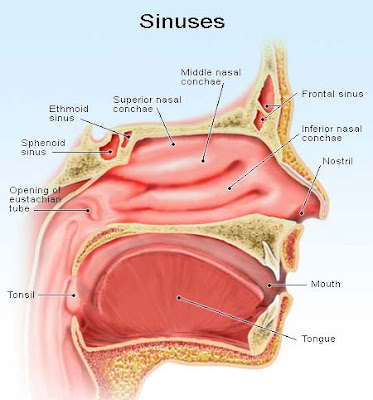
Sinus symptoms and signs are caused because of infection of sinus and resulting causes the swelling because of bacteria within the cavities of sinus.
The sinuses are the cavities which are open in the continuous connection with nasal openings which are free for both air and mucous. At this situation, sounds certain type of volume. When sinus gets blocked because of certain swelling and infectious air already present inside the sinus then this situation causes the sinus headache.
Another reason for sinus pain is that when nasal get blocked because of swollen and air unable to get into the sinus. Sinus spray is generally used as a treatment for the sinus infection which is sometimes prescribed and gotten over the counter. This spray is is useful for killing the bacteria and microbes which causes severe sinus infection symptoms.
There are four major pairs of the sinuses which are listed below:
Maxillary sinuses (behind the cheek bones)
Frontal sinuses (in the forehead)
Sphenoid sinuses (behind the eyes)
Ethmoid sinuses (between the eyes)
Types of Sinus infection:
Sinus infections are classified in 2 ways as given below:
Length of time
They are infectious or not.
Acute lasts within one month, where as sub acute takes one to three months to cure. And chronic infection lasts after the three months. Infectious sinus infections are normally caused because of virus, but there are fewer chances for causing the infection because of bacteria.
Environmental irritations and allergies may causes non-infectious. Environmental irritation is such as drugs, smoke etc. Chronic and sub-acute conditions are generally caused because of lack of or insufficient treatment for acute sinusitis.
Causes of sinus infection:
There are many different causes of sinusitis. One of the causes is that blocks the passage in the opening or the tumor removes by the surgery. Not only nasal sprays cause the infection but may also addictive Sometimes over the counter nasal sprays can not only cause infection, but can also be addictive. Illegal drugs such as cocaine and other types which are snorted throughout the nasal can cause the sinus infection and irritation.
Various types of bacteria are also responsible for causing the sinus infection. The cilia which are the small hairs present in the passage of the nasal and sinus cavities helpful for moving the mucous out of nasal area. These are damaged because of lack of humidity, smoke, or other different causes. When this occurs the mucous gets stagnates and perfect area becomes for the growth of the bacteria and starts the infection. Allergies to the food and other different substances may cause the food allergy.
Sinus infection symptoms and signs:
The general sinus infection symptoms are headaches, tenderness of the face and twenty five percent of the patients suffering from acute sinusitis have the fever also. Coughing, sore throat, and a greenish, cloudy, or yellowish nasal discharge are some of the signs of the sinus infection.
The other signs which are checked by the doctor for diagnosing are swollen areas near the eyes, nasal passage which becomes reddened, drainage from the nose that is similar to pus and facial areas over the sinuses that are tender to percussion. Additional information is also useful for diagnosis such as history of the patient and some tests such as a MRI, or the CT scan may also be takes place because these tests are good at illuminating the actual infection rather than an X-Ray.
The bacteria, fungi and virus are responsible for causing the sinus infection. Treatment is based on the type of the infection so good and early diagnosis is very necessary.
Following are some common sinus infection symptoms::
Pain in the forehead, jaw, teeth and cheeks, or between the eyes.
Headache, particularly first thing in the morning.
Swollen or inflamed tear ducts, eyelids, and other tissues surrounding the eyes.
Fever.
Congestion, sore throat, neck pain or cough.
Weakness and fatigue.
Treatment of Sinusitis:
Self-Care at Home:
Home treatment opens the sinuses and eases their dryness:
Promote drainage
Drink lot of water and hydrating drinks as like hot tea.
Take a stream 2 to 4 times in a day by bowel of a hot water but not take when it is on stove or simply use stream vaporizer. Inhale the steam near about ten minutes. Steamy, hot shower is also effective. Vicks Vapo Run can be added in to the water and then take a stream which is useful for opening the passageways.
Thin the mucus: Expectorants are the drugs which are helpful for expelling the mucus from the lungs and the respiratory passages. They help thin secreation of the mucus and enhancing drainage from sinuses. Guaifenesin is used very commonly. Over- the-counter (OTC) cough medications which are in liquid form or prescription tablets can also combined for reducing the sinus infection symptoms. For knowing the right combination just read out the label ingredients or asks to the pharmacists.
Relieve pain: For reducing the inflammation and pain the medications are used such as ibuprofen (Motrin and Advil are examples), naproxen (Aleve) and aspirin. These drugs are useful for opening the airways by reducing the swelling. Acetaminophen (Tylenol) can be used for fever and pain but it is not helpful for inflammation.
Medical Treatment:
The main goal of the treatment of sinus infection is reduce the inflammation and swelling in the nasal areas, removes the infection and support the drainage from sinuses and maintain the open sinuses. Medications are suggested for treating the sinus infection but antibodies are taken for at least 10 to 14 days.
If the infection is chronic then antibodies continues up to 21 days. Extreme chronic infection does not give response to the prescribed medications and therefore patients have to take the medications for long duration. Still there is no any effect of the medication then it is related to surgical procedure and need stay in hospital.
In case of the chronic sinus infection, some of the times infection extends up to brain and eventually causes the death. But this condition occurs very rarely and not occurs frequently.
If the proper treatment is provided and treated if treatment is sought in particular time then sinus infection cures immediately.
Alternative Health News
Read More
Sunday, October 30, 2011
Week 4- Saute

This week I was on the saute station for A La Carte. The four dishes that come off saute are:
a Shell Bowl (mussels, clams, and scallops)

Short Ribs and Chili Mac with Potlikker Greens (yes, that's spelled correctly)

A Mushroom Veloute (soup)

and Seared Scallops with Spaghetti Squash. There are two of us on the station, so we each are responsible for two dishes. I was in charge of the Veloute and the Scallops.
Prior to Monday, I made a list of everything that needed done and the time each would take. I also made a list of mise en place to gather. This ended up being a huge time saver, as well as helping us stay organized.
Monday we prepped everything for service. I made the Veloute, roasted the squash, and prepped all the items for the Bouillabaisse for the shell bowl. Stacy seared and braised the short ribs and prepared it's sauce, cooked the pasta, and cleaned her shellfish. The Roundswoman prepared the Bechamel for the Chili Mac.
Tuesday we have an hour prior to service to get everything ready. I, again, had made a list of everything left to do and the order we needed to do it in (IE, prepare crackers asap!), the utensils and pots I would need for service, and the plates we were going to need to gather. I realized how much I have actually learned working the line at Nippers when it came time to set up the station and get ready for service. I immediately set up a bain marie on the stove to hold all our hot items that are not prepared a la minute. I set up a sani bucket for my utensils in addition to the one for the station. I gathered our plates and put them in an oven at 175F to keep warm for service. I gathered all the pots and utensils I would need during service. Chef came by and began to tell us several items on that list we needed, and everything was already done.
We warmed our items that were prepared the day before, and I made the crackers and a buerre blanc, as well as thawed and panned the scallops. We set up the cold station and it was time for service!
Service is only two hours long and was over before I knew it. I stayed calm and my scallops came out so wonderfully. It was actually kind of fun working saute, and I enjoyed the experience. Our homework was to prepare a list of what we could do better to improve the flow of service.
I will be on saute again next week and then we will rotate to another station. I haven't decided what station I would like to move to next. Perhaps Garde Manger.
Subscribe to:
Posts (Atom)